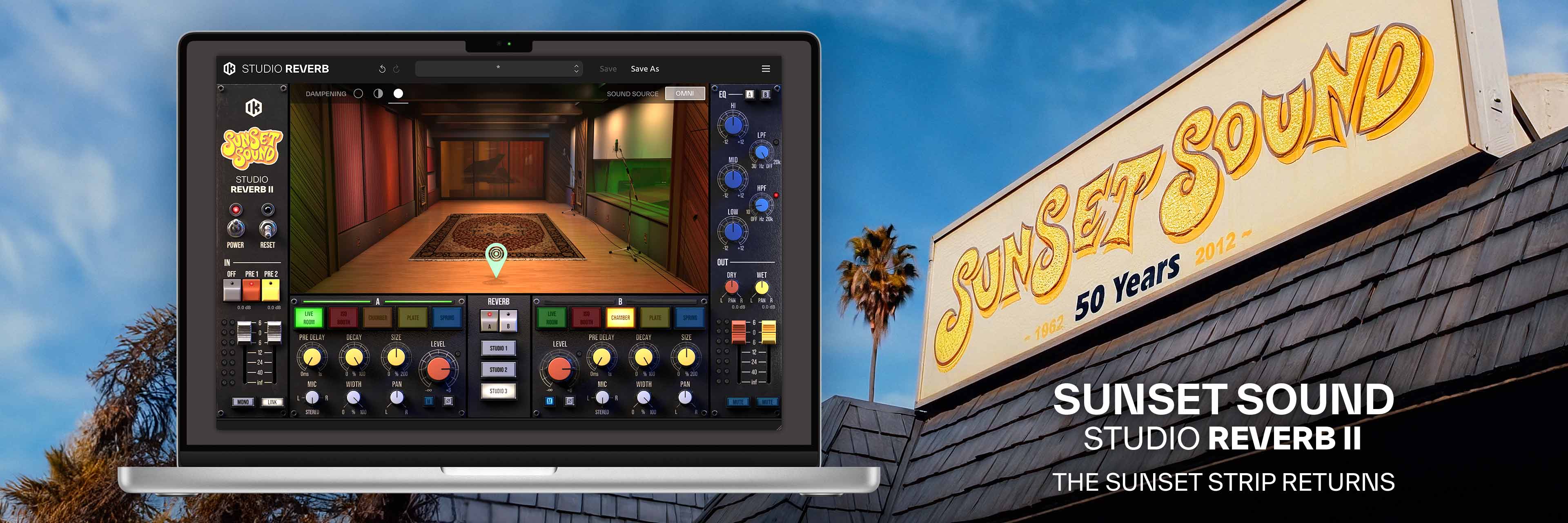
The definitive recreation of Sunset Sound’s live rooms
Sunset Sound Studio Reverb II is a standalone and deeply expanded evolution of the original bestselling T-RackS plug-in, capturing the acoustic complexity of Studios 1, 2, and 3 with unprecedented spatial resolution and control.
Built on IK’s Volumetric Response Modeling (VRM™) technology, Version II moves beyond static impulse responses to deliver dynamic, position-dependent realism — preserving the tone, depth, and movement that define recordings made at Sunset Sound.

What’s New in Version II
-
Discrete Live Room Positioning
Up to 27 individually captured source locations per studio (no interpolation).
-
Dual Reverb Architecture
Two fully independent engines with parallel routing.
-
Expanded Capture Library
336 live room stereo IRs for unmatched spatial authenticity.
-
Directional & Omni Sound Source Modes
Physically accurate, naturally enveloping reverbs.
-
Advanced Size Control and per-channel EQ
Expand, contract, and shape any space with precision.
-
Variable Acoustic Dampening
Movable panel modeling in Studios 1 and 3.
Listen to audio demos
True 3D Source Positioning
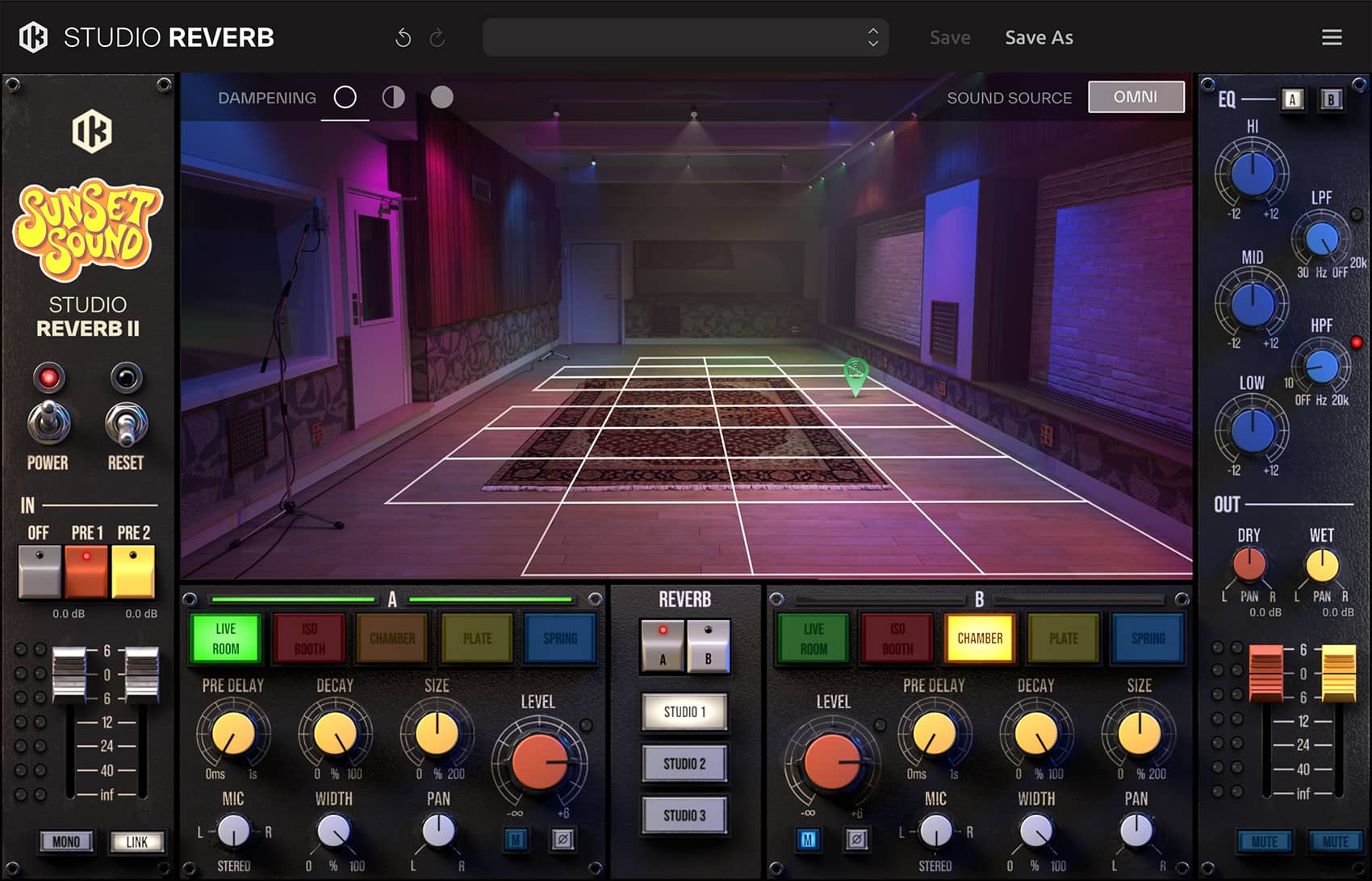
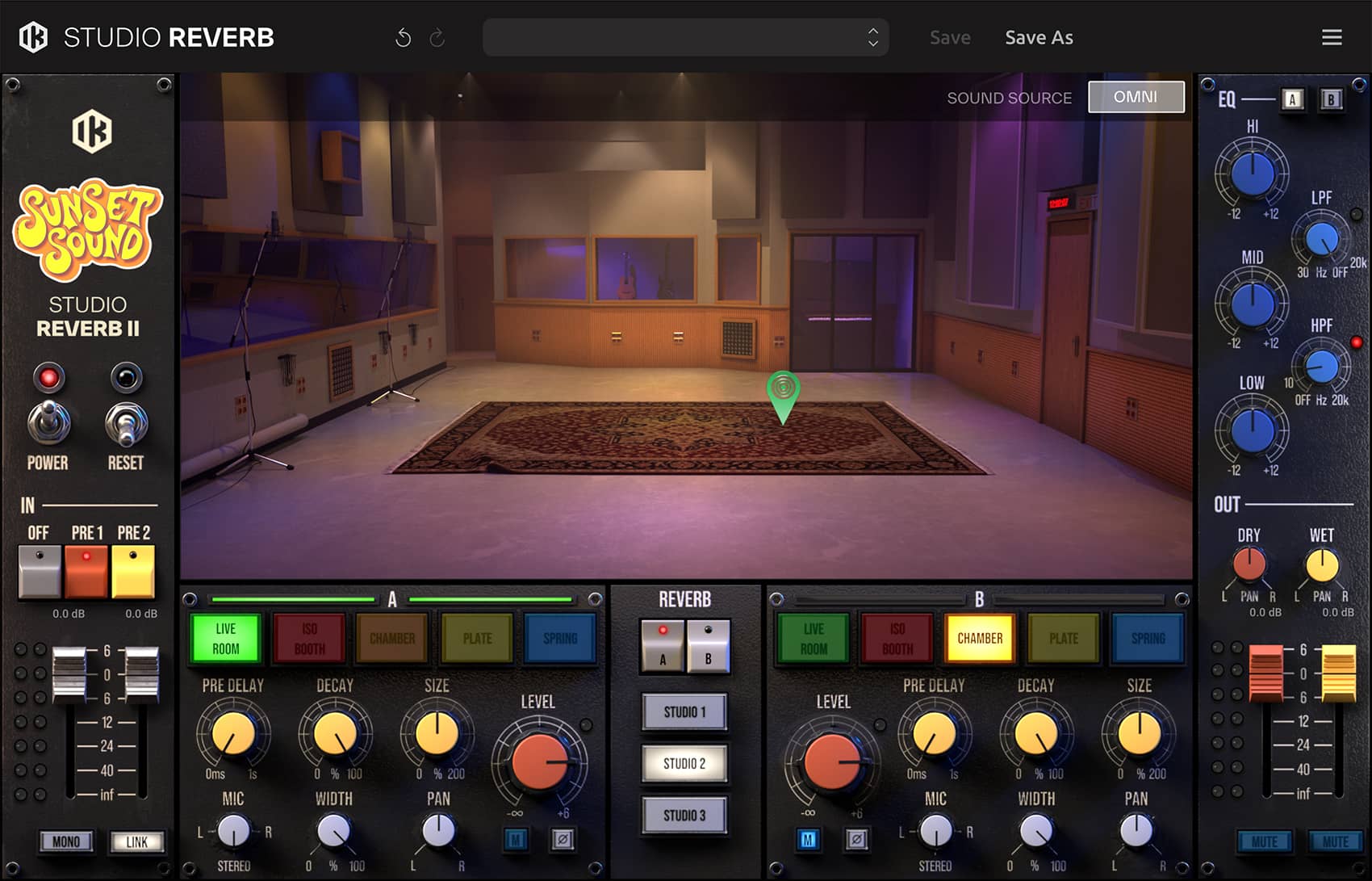
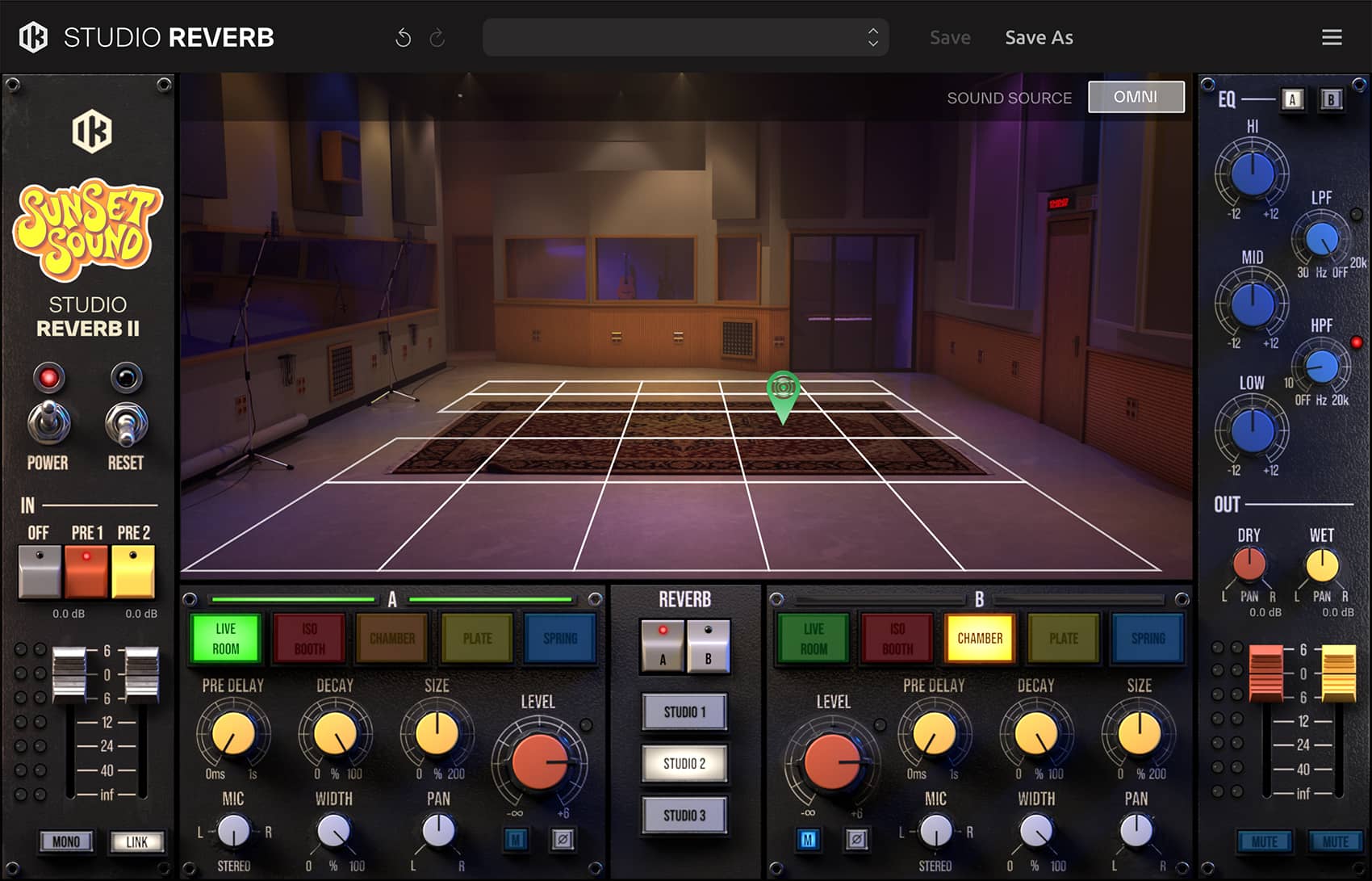
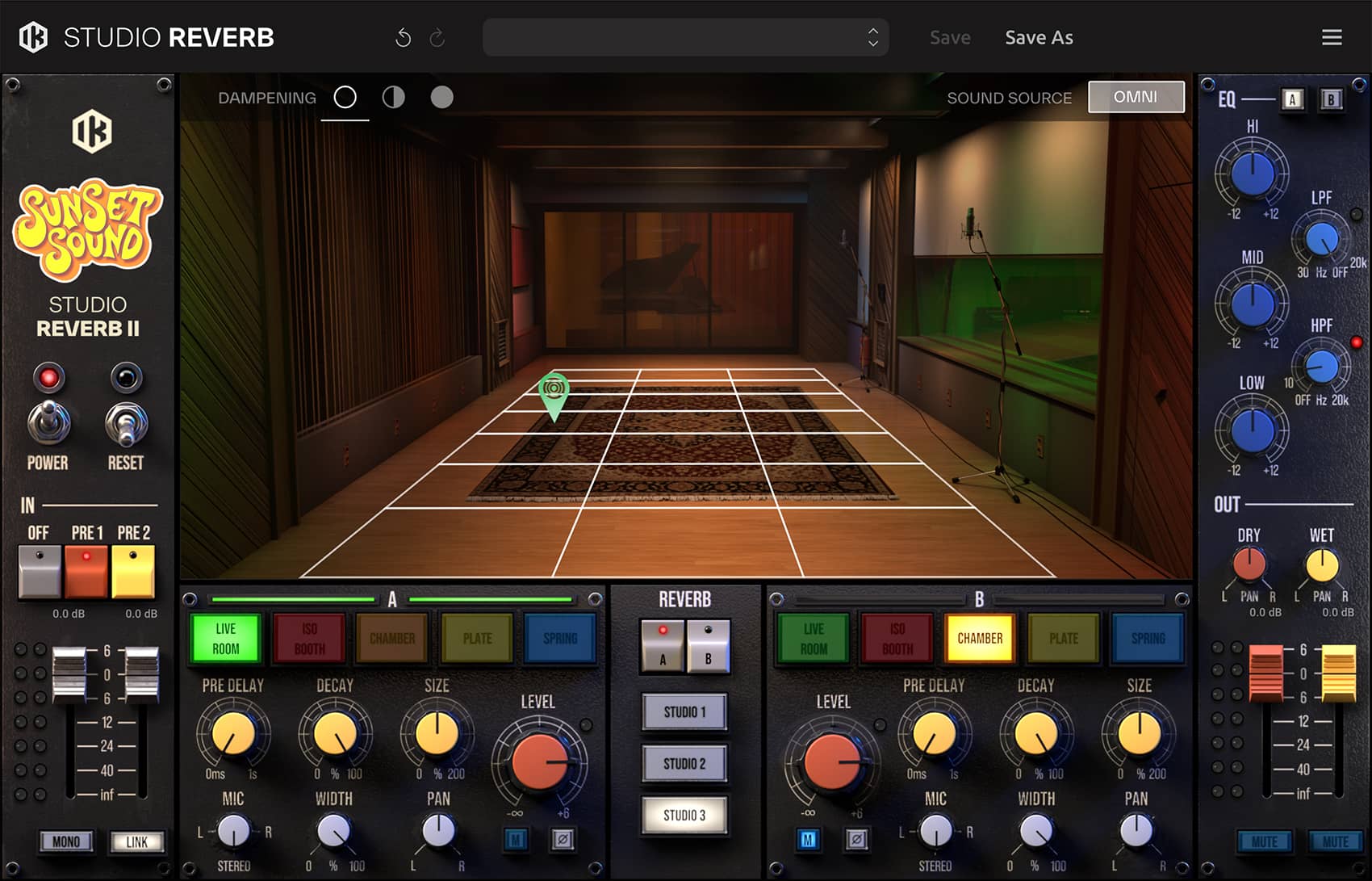
Version II introduces a fully sampled Live Room Positioning System with up to 27 discrete source locations per studio.

Studio 1 - GRID

Studio 2 - GRID

Studio 3 - GRID
Every position was captured as a unique acoustic event — not interpolated — allowing you to capture boundary reinforcement, early reflection changes, and authentic spatial perspective.
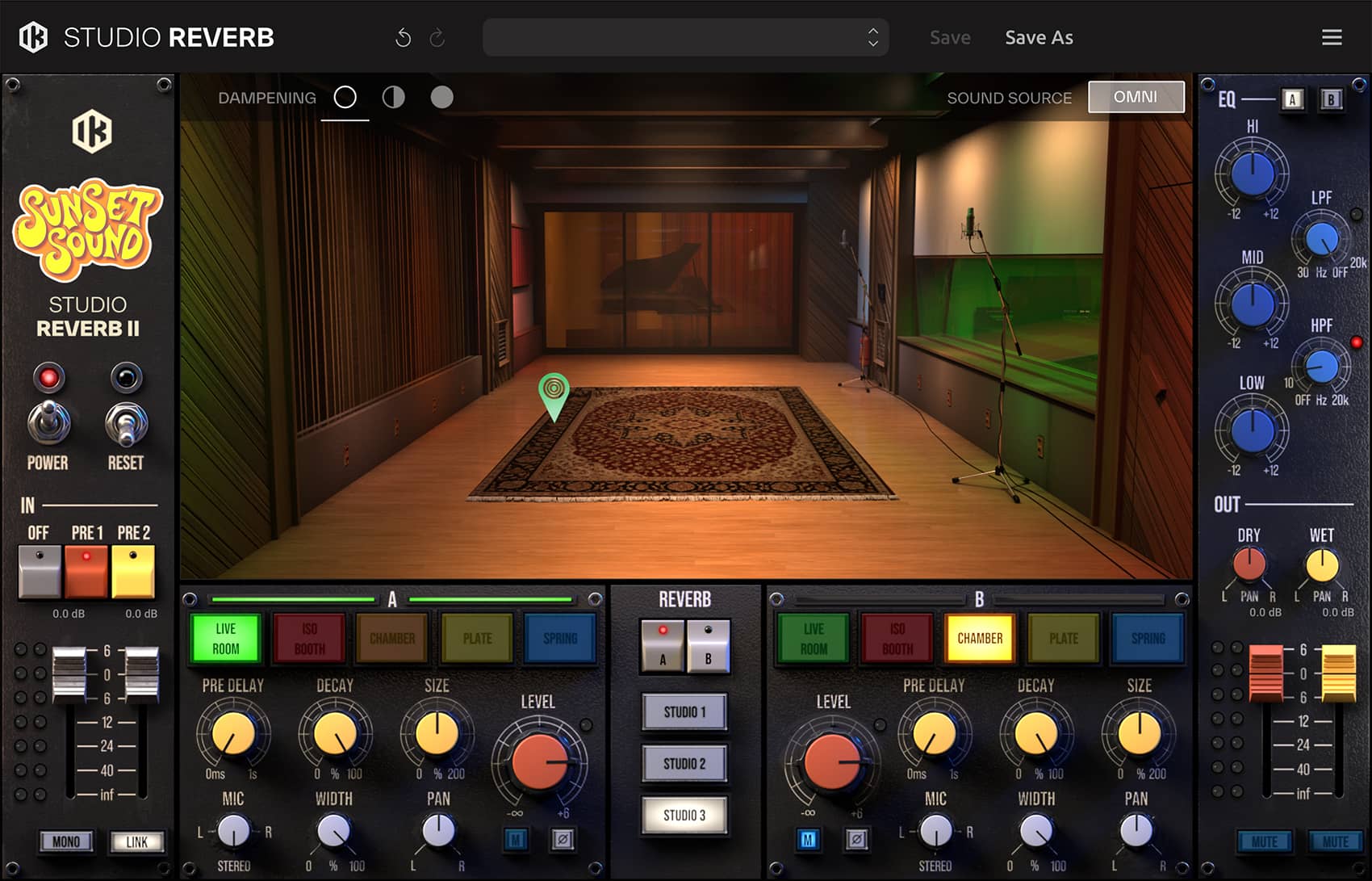
Studios 1 and 3 also include variable dampening states, modeling movable absorption panels to alter decay characteristics and tonal balance in a physically accurate way.
Dual-Engine Reverb Architecture

Sunset Sound Studio Reverb II features a fully independent dual-engine design.
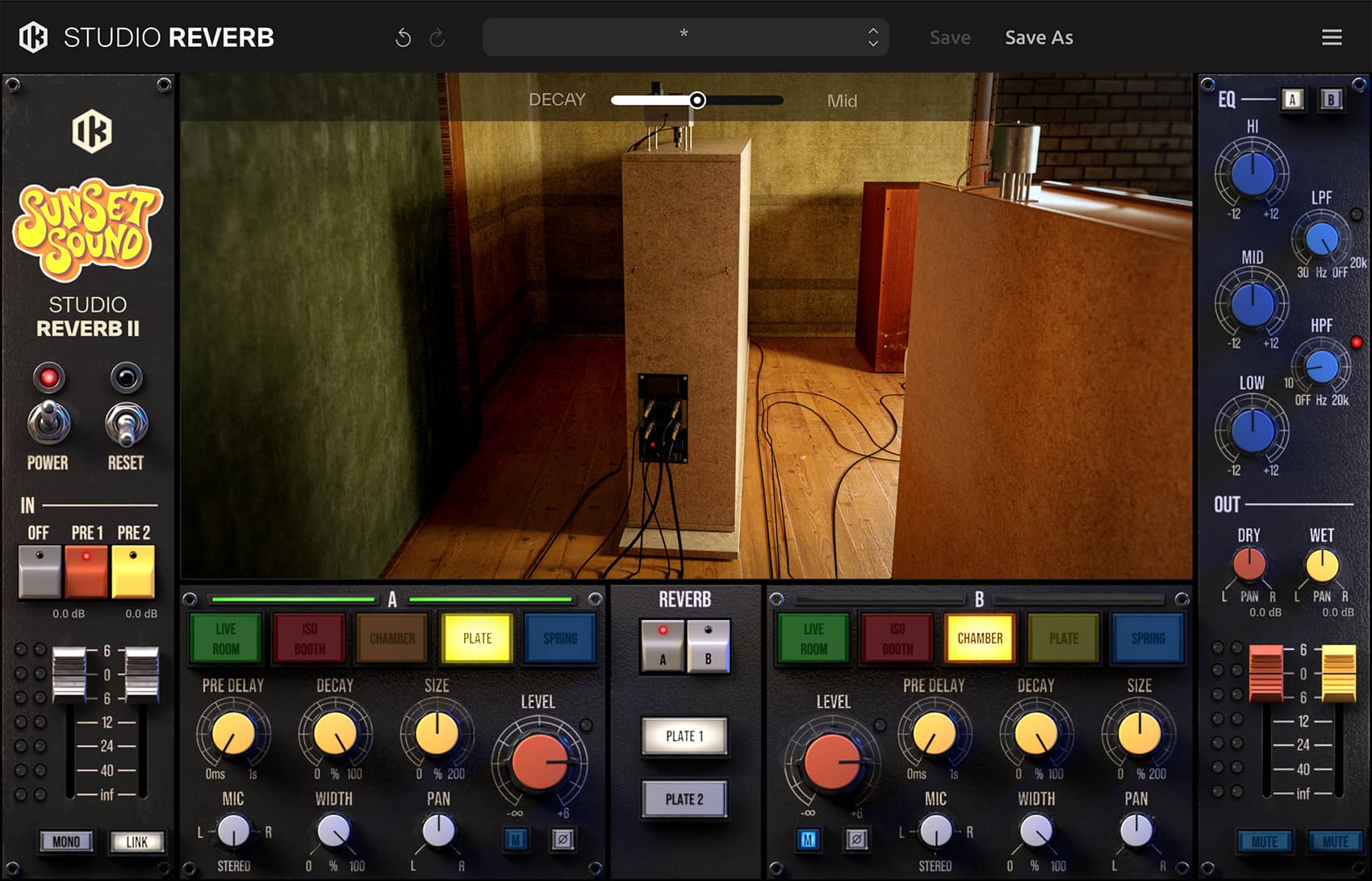
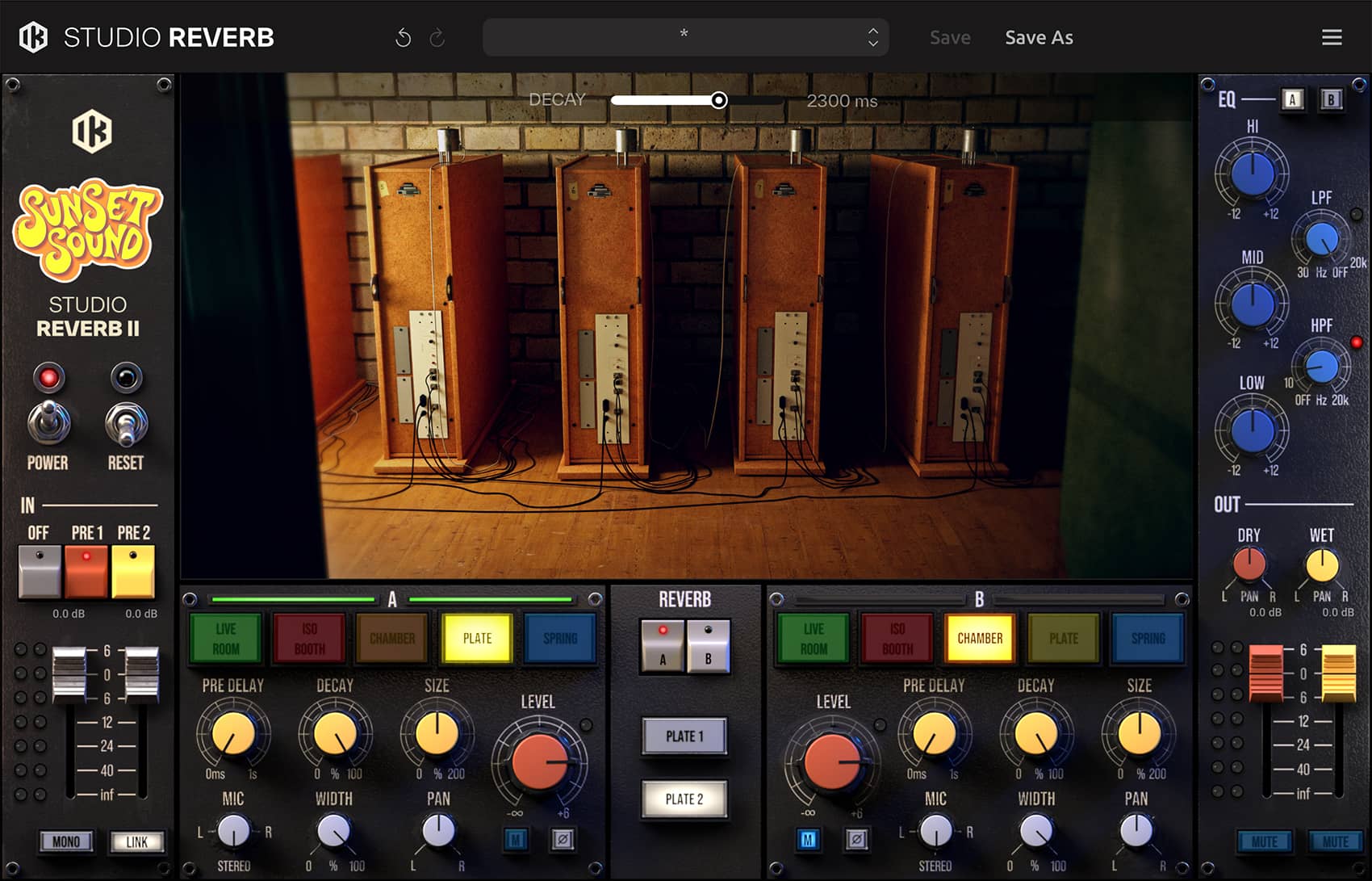
Run two reverbs in parallel and combine Live Rooms, Chambers, Iso Booths, EMT plates, and AKG spring reverbs — each with its own EQ, stereo control, and routing.
Layer physical spaces with hardware reverbs — or blend multiple room perspectives — with complete control.

EMT 140

Echoplate

AKG BX-20E
Advanced Size Control — Reshape the Space
Size in Version II is not a simple decay adjustment. It dynamically scales the impulse response length from 0% to 200% while preserving the tonal fingerprint and spatial behavior of the original capture.
This allows you to:
- Tighten or enlarge rooms without losing the early reflection structure
- Extend smaller spaces into expansive cinematic environments
- Maintain spatial coherence while adapting decay to tempo and arrangement
- Push beyond physical constraints while retaining the character of Sunset Sound
Instead of switching rooms to fit a mix, you can reshape the room itself — subtly or dramatically — without sacrificing realism.


Directional and Omni
Sound Source modes
Different sources energize a room differently. Sunset Sound Studio Reverb II reflects that with two sound source modes:
- Directional Mode — Focused dispersion for vocals, guitar cabinets, brass
- Omni Mode — Natural, uniform sound propagation for drums, piano, ensembles
Besides the recommended instrument pairings, adjusting the sound source mode enhances depth perception, ensures smoother decay blending, and improves overall mix translation, becoming the “secret sauce” that takes your productions to the next level.
Expanded Capture Library
Version II includes 336 meticulously captured stereo IRs from the live rooms alone, significantly expanding spatial variation compared to the original version.

Variable Acoustic Dampening
Multiple Rooms Within One Room
Studios 1 and 3 feature modeled variable acoustic dampening, replicating the effect of Sunset Sound’s movable absorption panels. Rather than applying post-processing EQ or artificial decay shaping, Version II captures distinct physical acoustic states of the room itself and the type of dampening — altering reflection density, decay behavior, and tonal balance at the source.

Studio 3 - default dampening

Studio 3 - half dampening

Studio 3 - full dampening
This allows you to:
- Tighten low-frequency buildup naturally
- Soften high-frequency reflections without losing clarity
- Control decay density while preserving spatial realism
- Adapt the same room to different instruments and arrangements
The result is not just tonal variation but also physically accurate changes in how the room responds, giving you multiple authentic room characters within a single studio environment.
True Analog Warmth
Beyond using Sunset’s extensive vintage mic locker, IK used award-winning physical modeling to recreate the studio’s iconic consoles. In version II, you can enable two different preamplifier and signal path emulations, namely an API/DeMedio Sunset Sound Custom and a Class-A-Discrete NEVE 8880, to enhance the harmonic content and sound signature.

Studio 1

Studio 2

Studio 3
Designed for Working Engineers
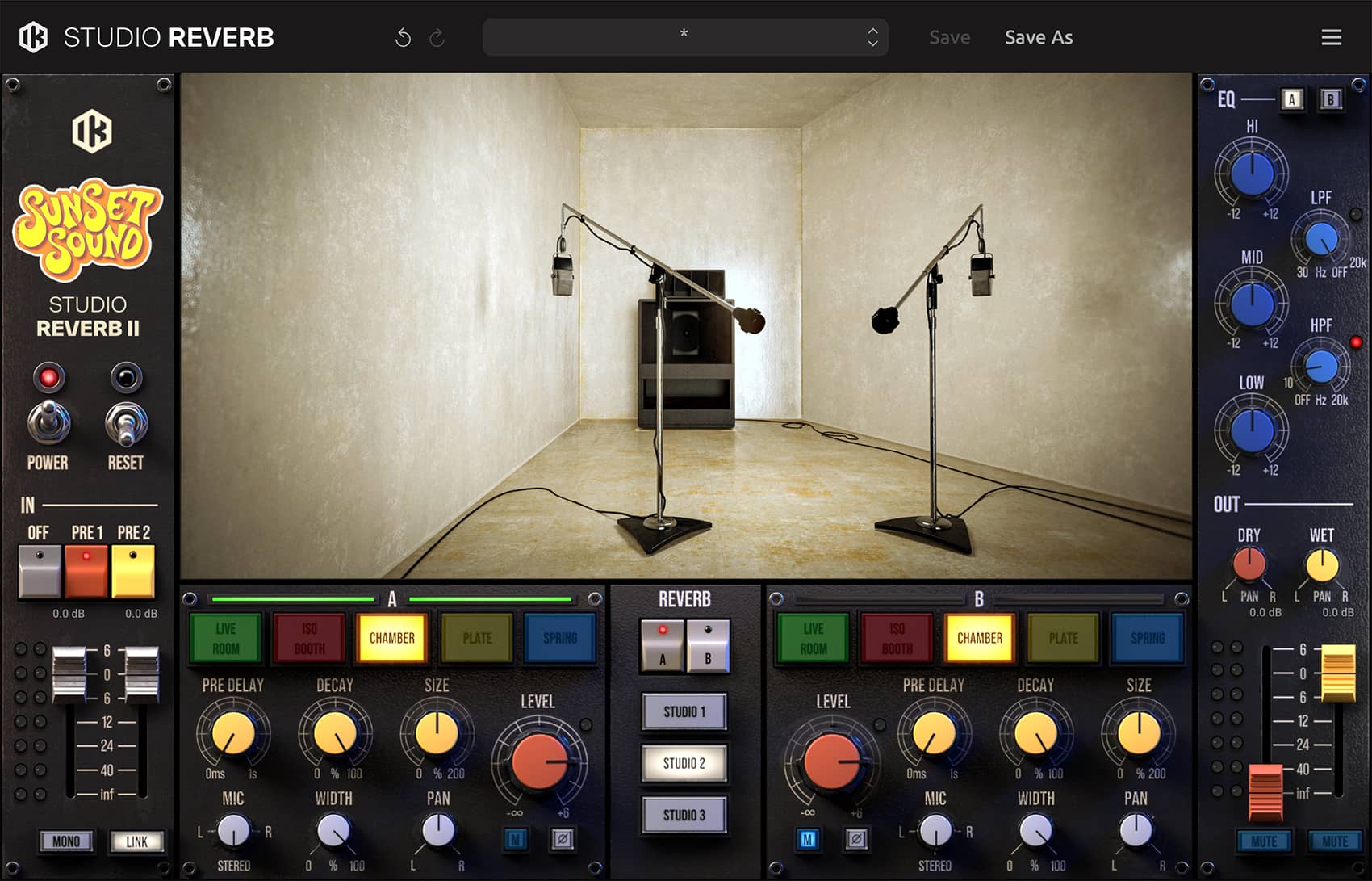
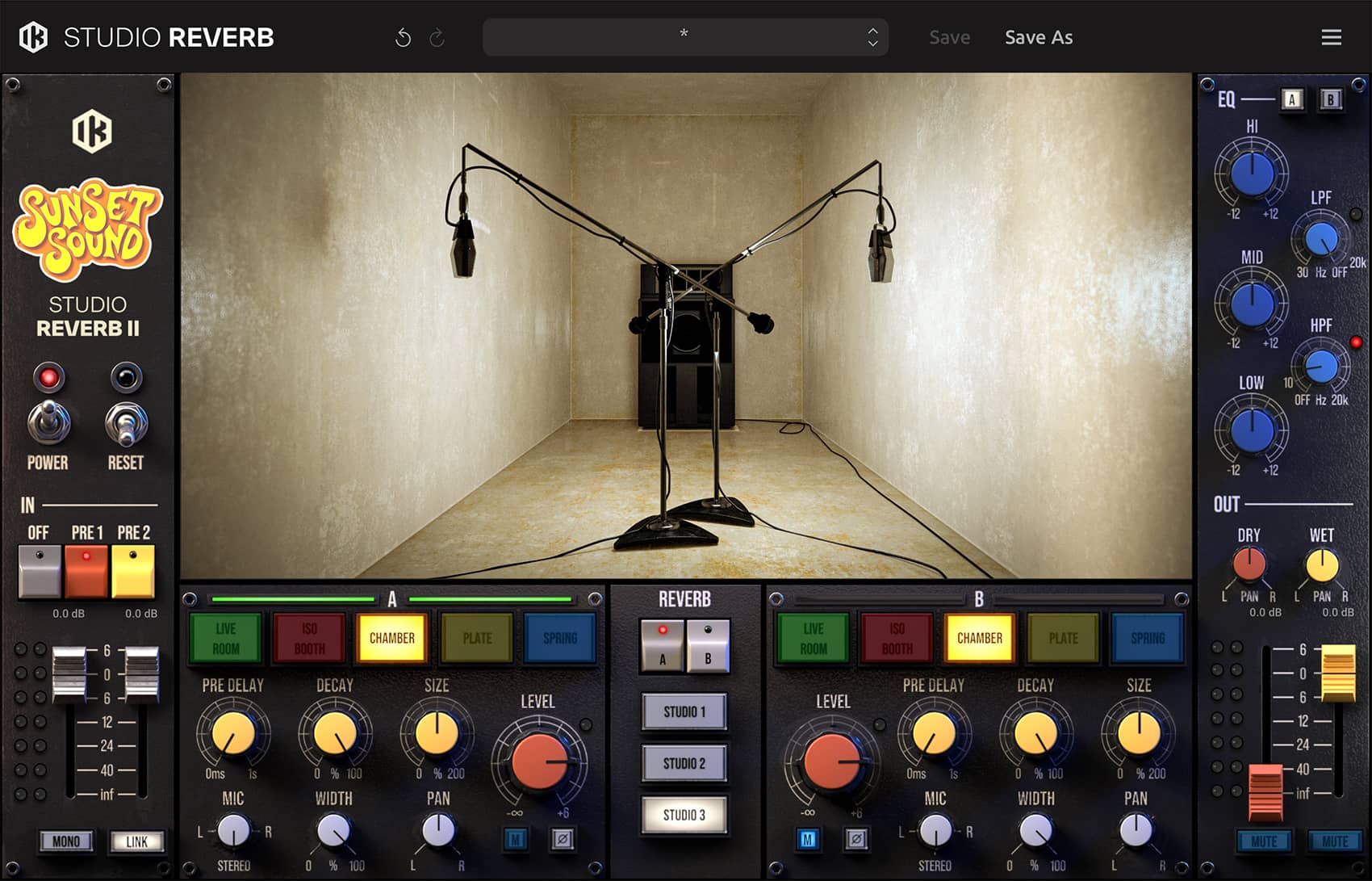
The redesigned 3D interface provides immediate visual feedback without sacrificing precision. Source movement, diffusion selection, dampening states, and routing adjustments are accessible without interrupting workflow.
Sunset Sound Studio Reverb II is not simply a room emulation. It is a spatial instrument — built from one of the most recorded studios in music history — engineered for realism, flexibility, and modern mix control.


The sound of music history
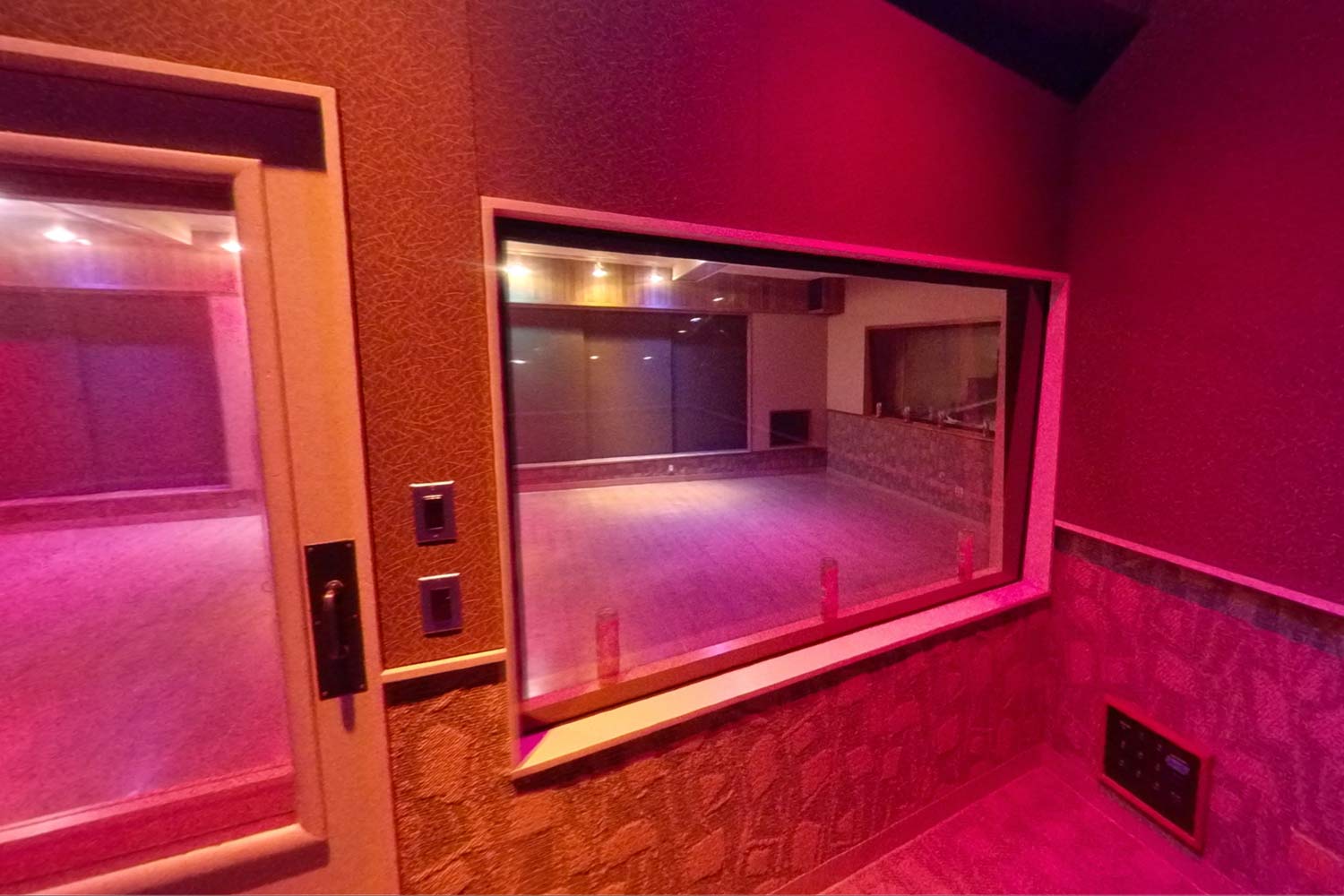
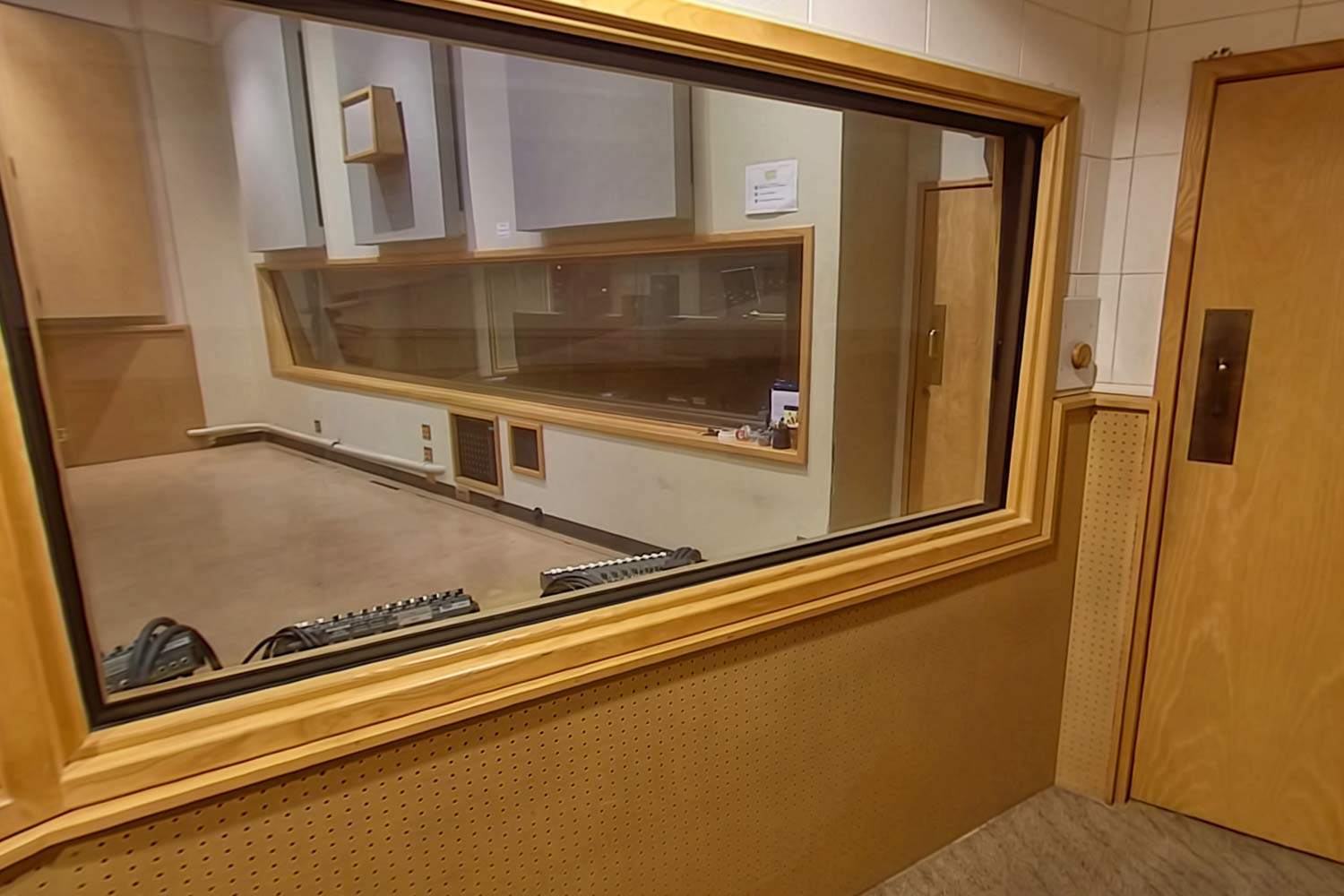
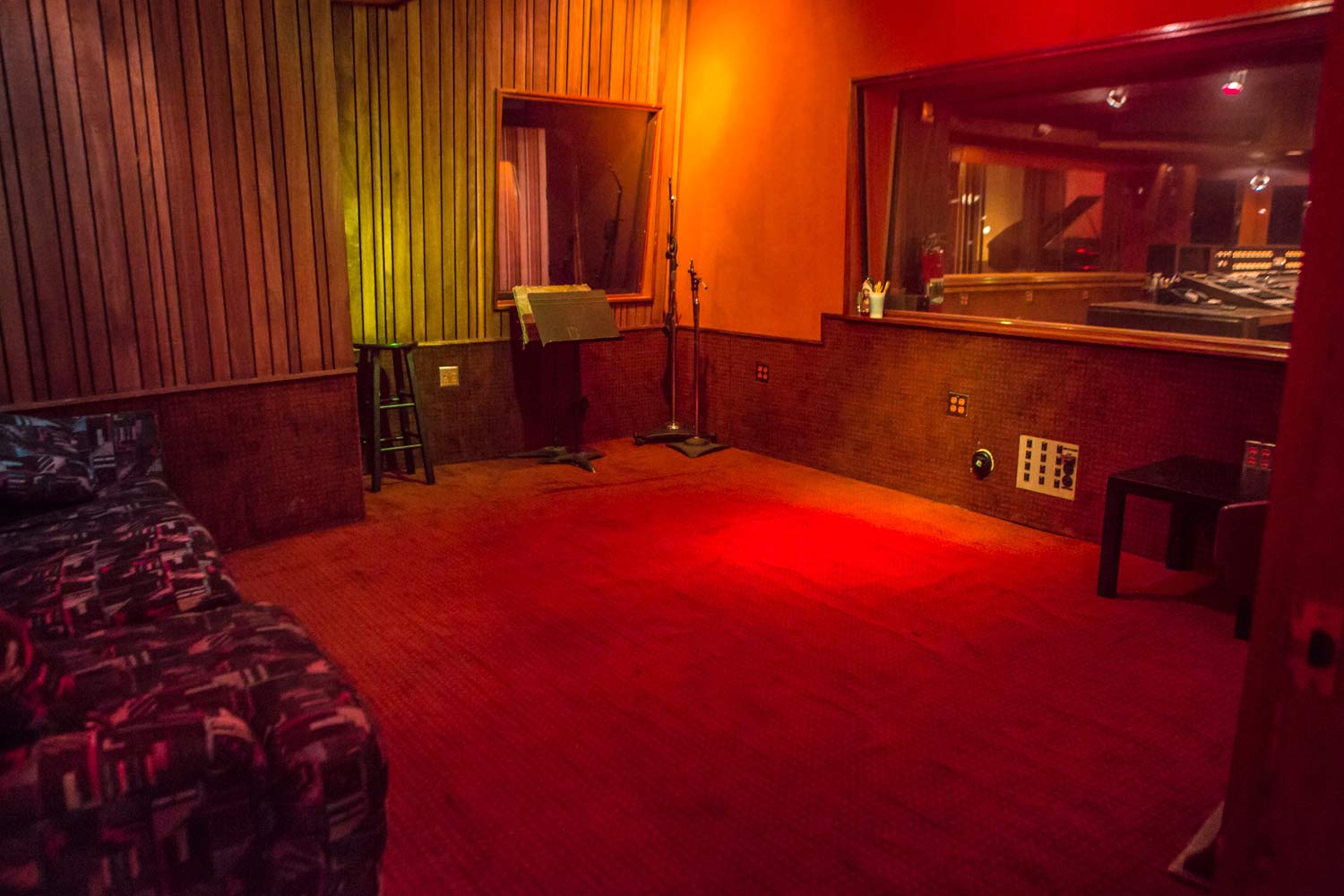
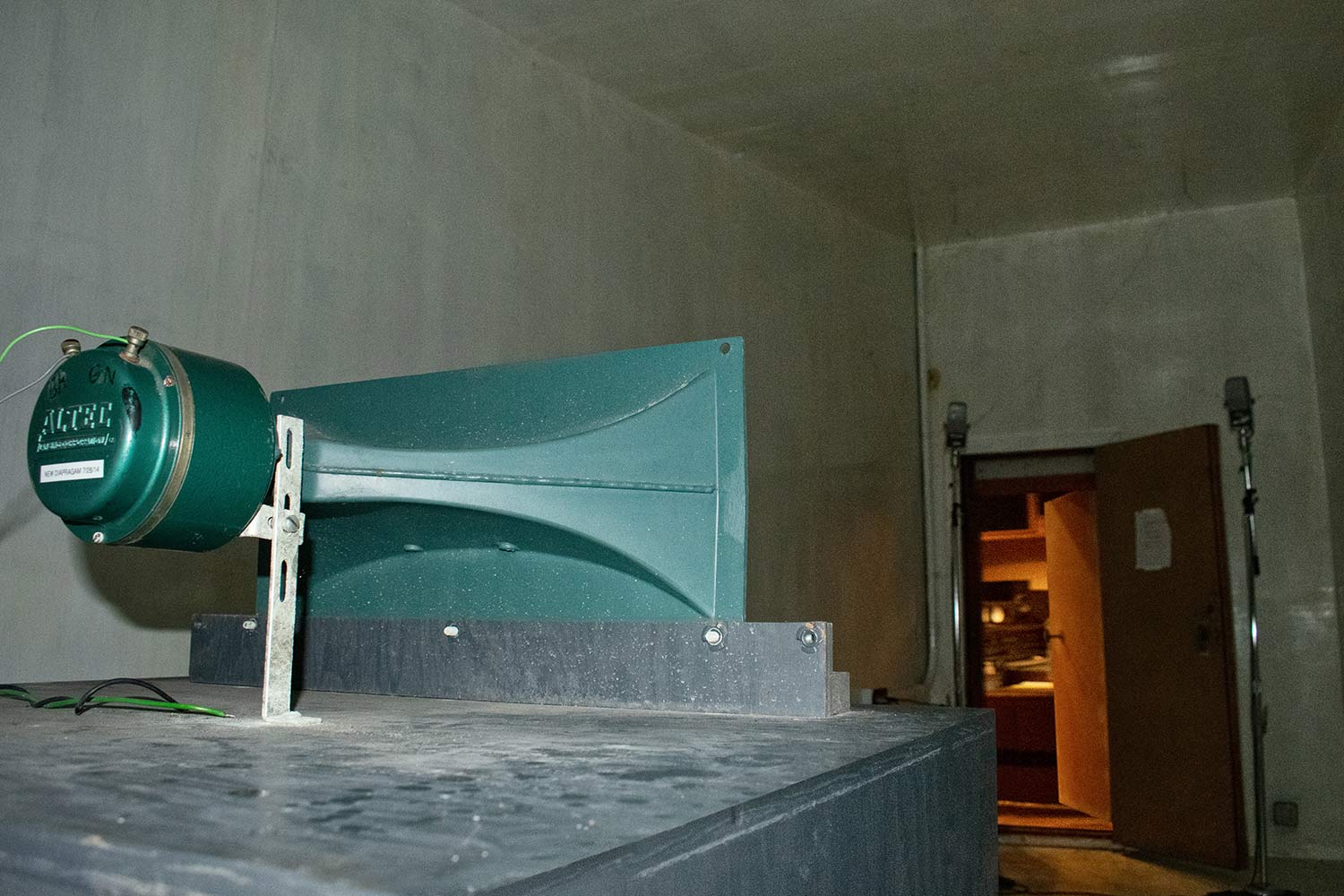
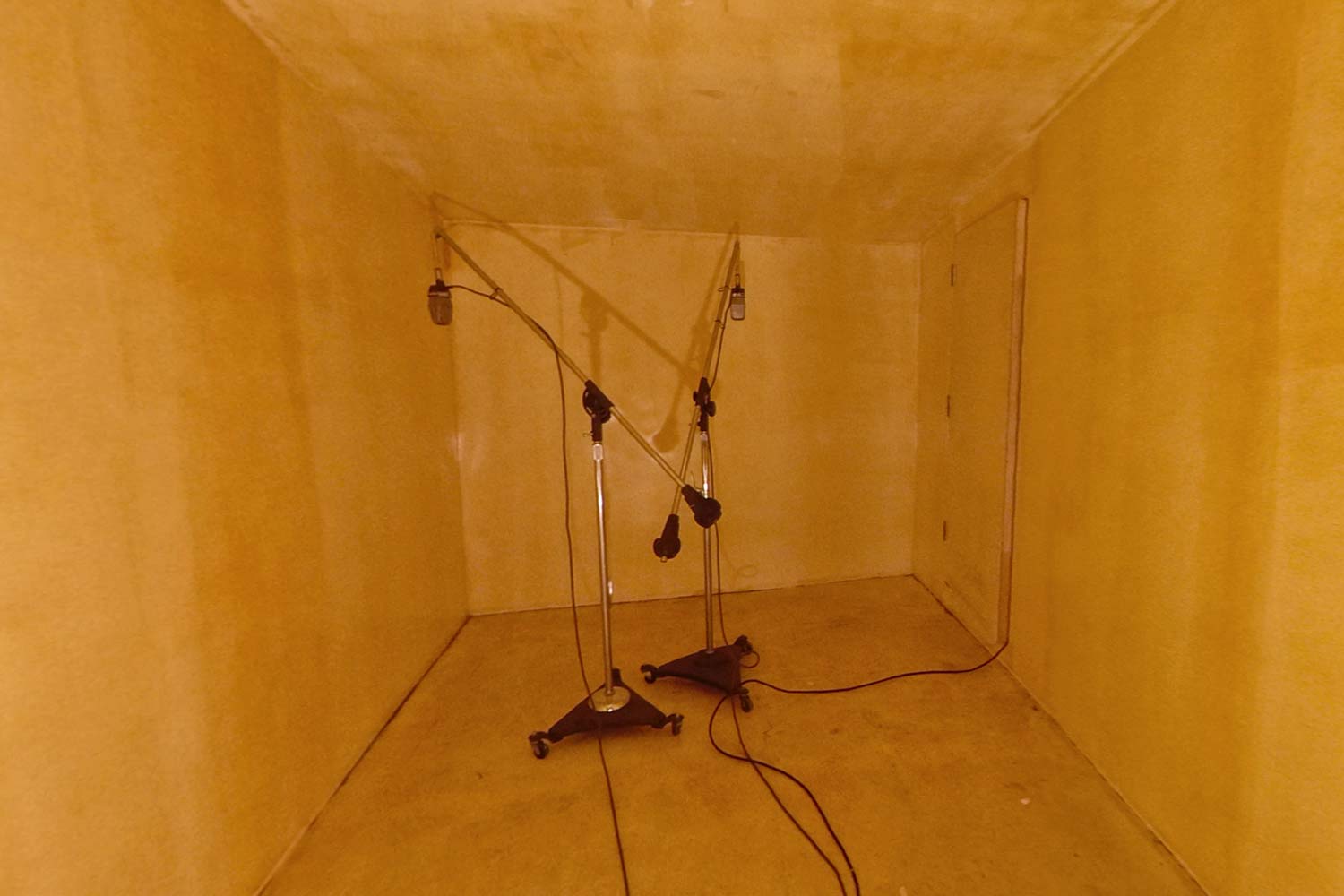
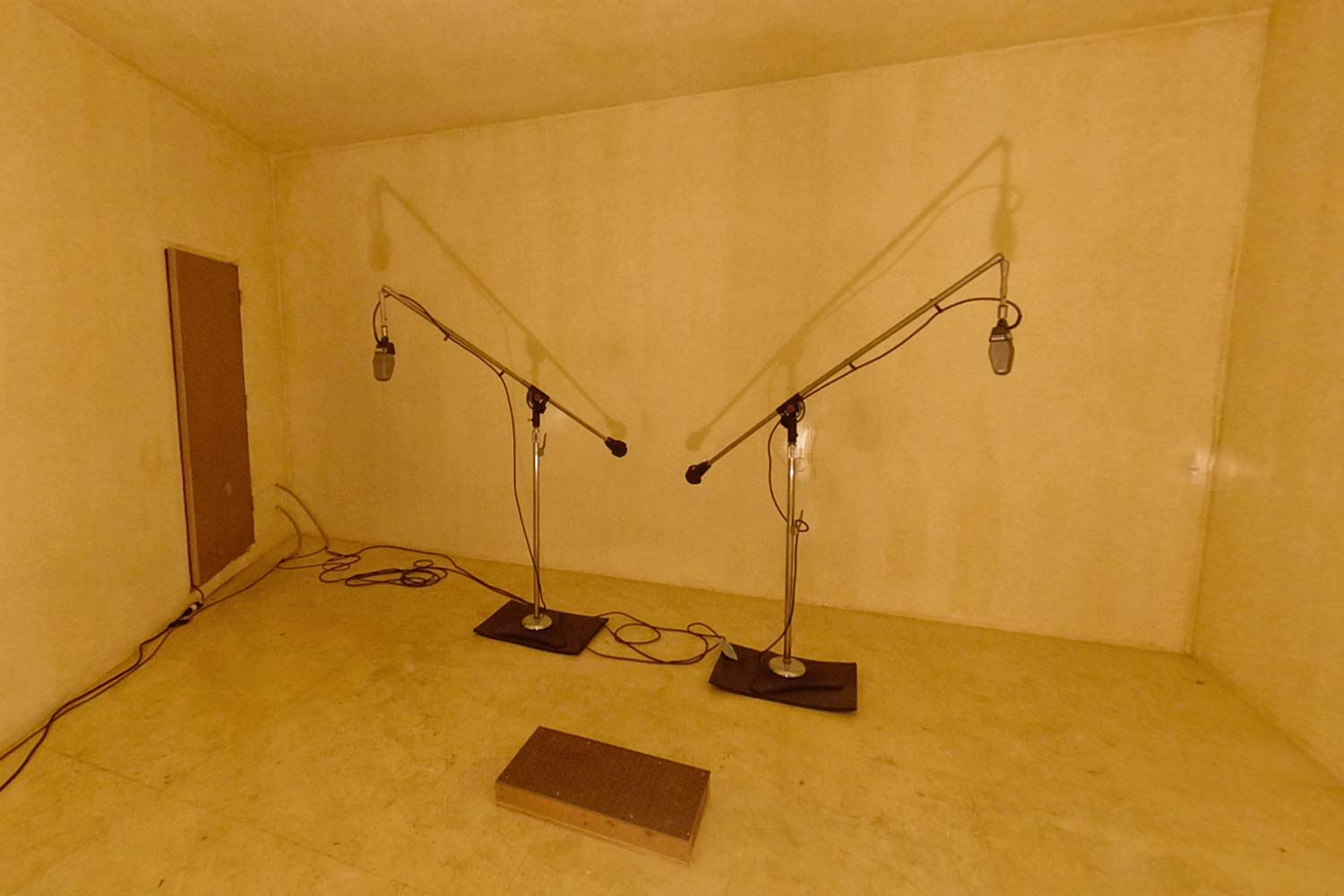
Sunset Sound Recordings was opened in 1958 by Tutti Camarata, then director of recording for Disney Studios. The space’s slanted floor and uneven walls gave it ideal acoustics, and soon the studio was busy recording Disney classics like “Mary Poppins”.
By 1962, Sunset Sound was welcoming artists like the Doors, Joe Cocker, the Rolling Stones, Neil Young, the Beach Boys, and Led Zeppelin. Since then artists from all genres have kept Sunset busy: Van Halen, Toto, Prince, Bob Dylan, Tom Petty, Whitney Houston, the Doobie Brothers, Miles Davis, Elton John, Alanis Morissette, Smashing Pumpkins, Sheryl Crow, Rage Against The Machine, Audioslave, Ryan Adams, Beck and more.
Today, the live rooms, vocal booths and echo chambers of Sunset Sound have become a part of the fabric of popular music itself. That’s why IK Multimedia and current studio owner Paul Camarata wanted to give all musicians the chance to add a little of Sunset’s magic to their tracks.

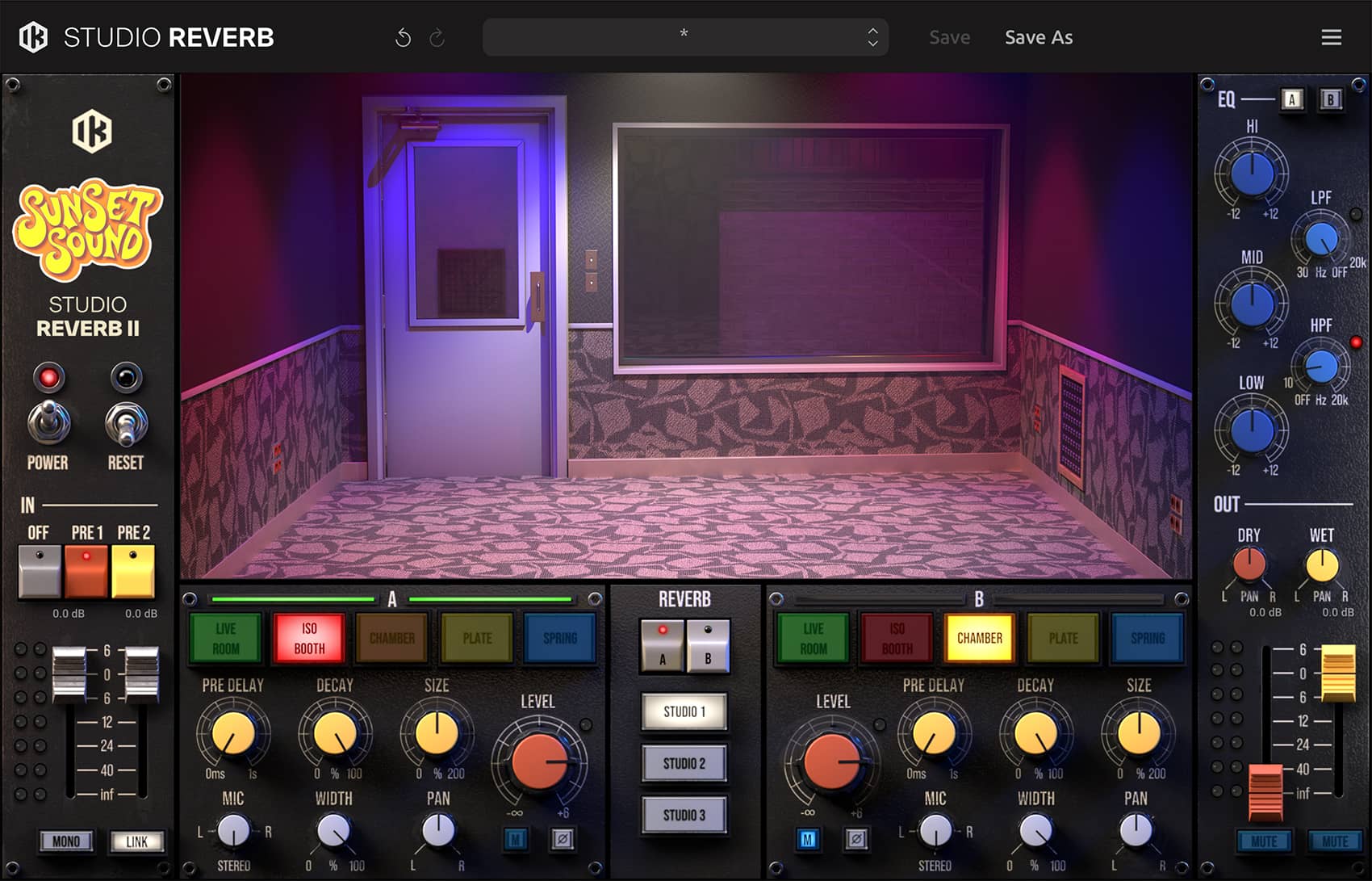
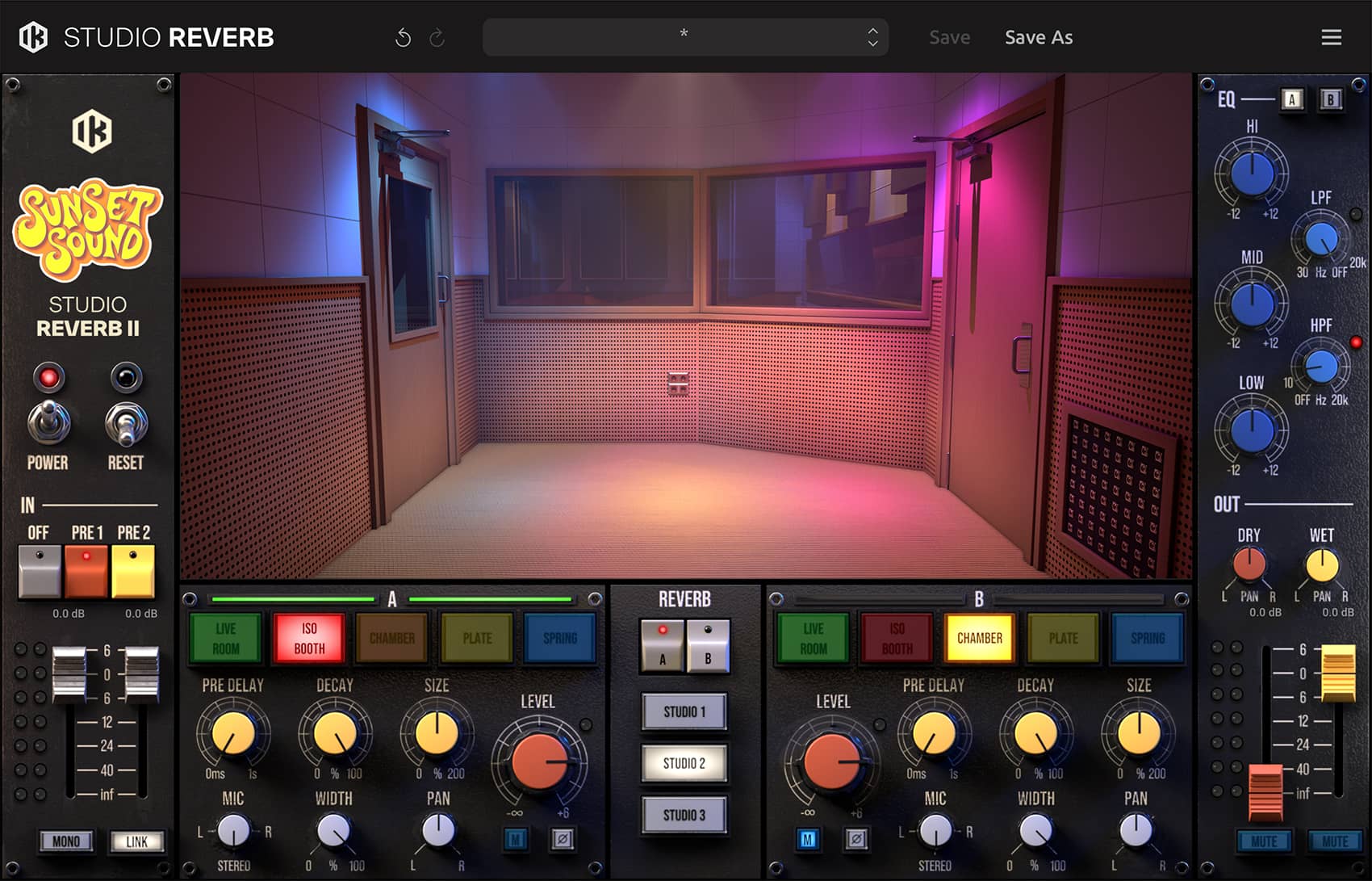
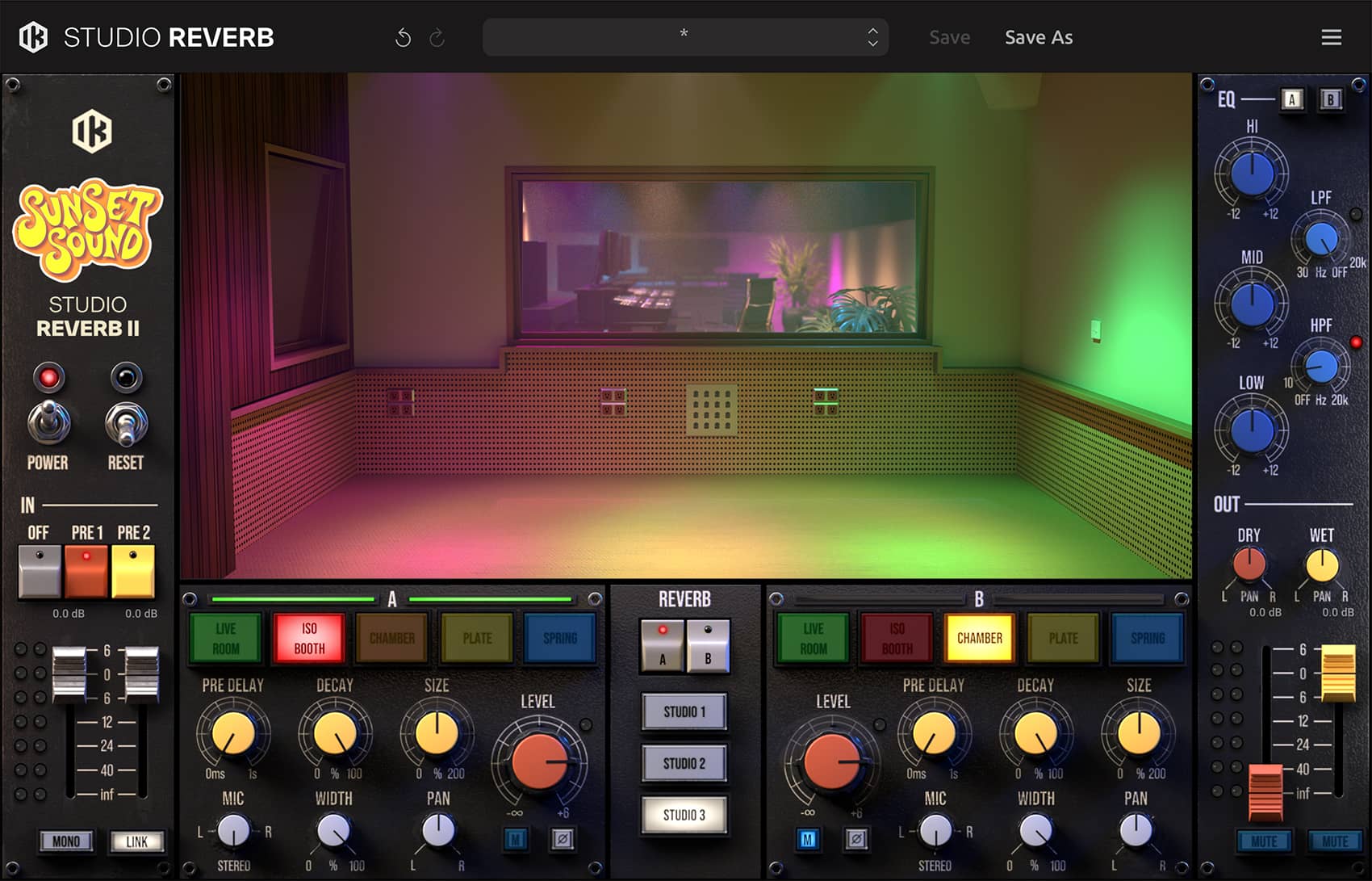
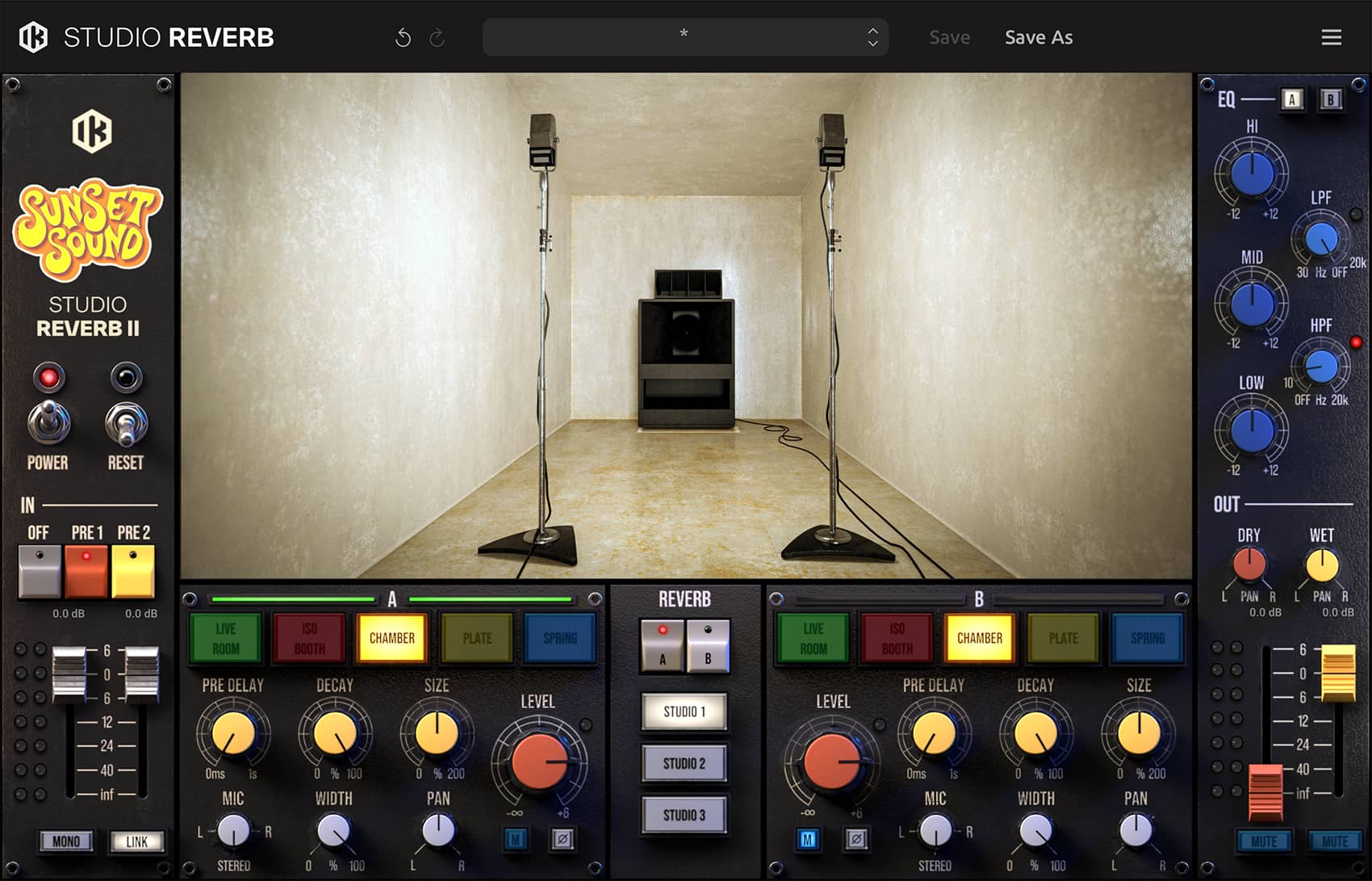
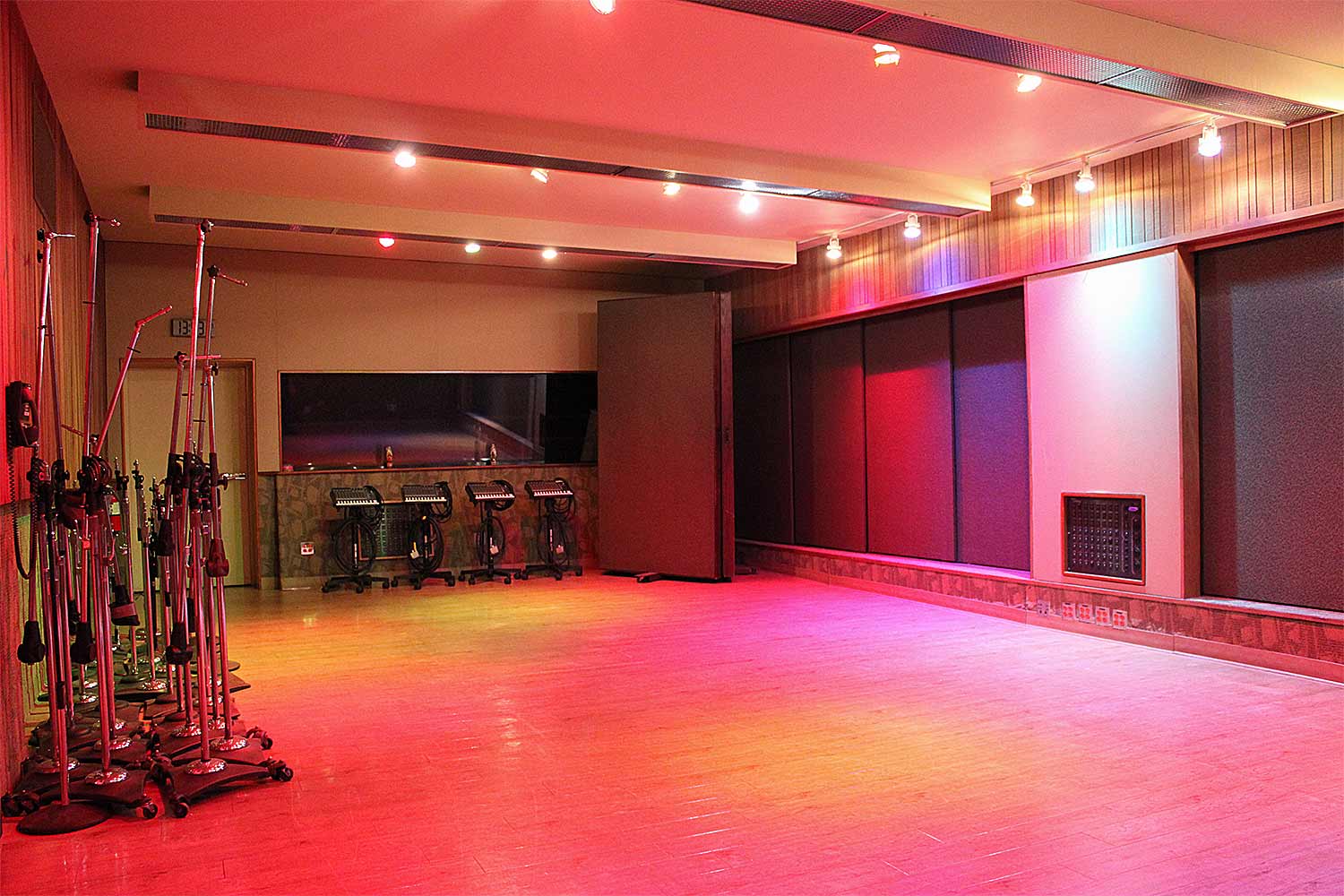
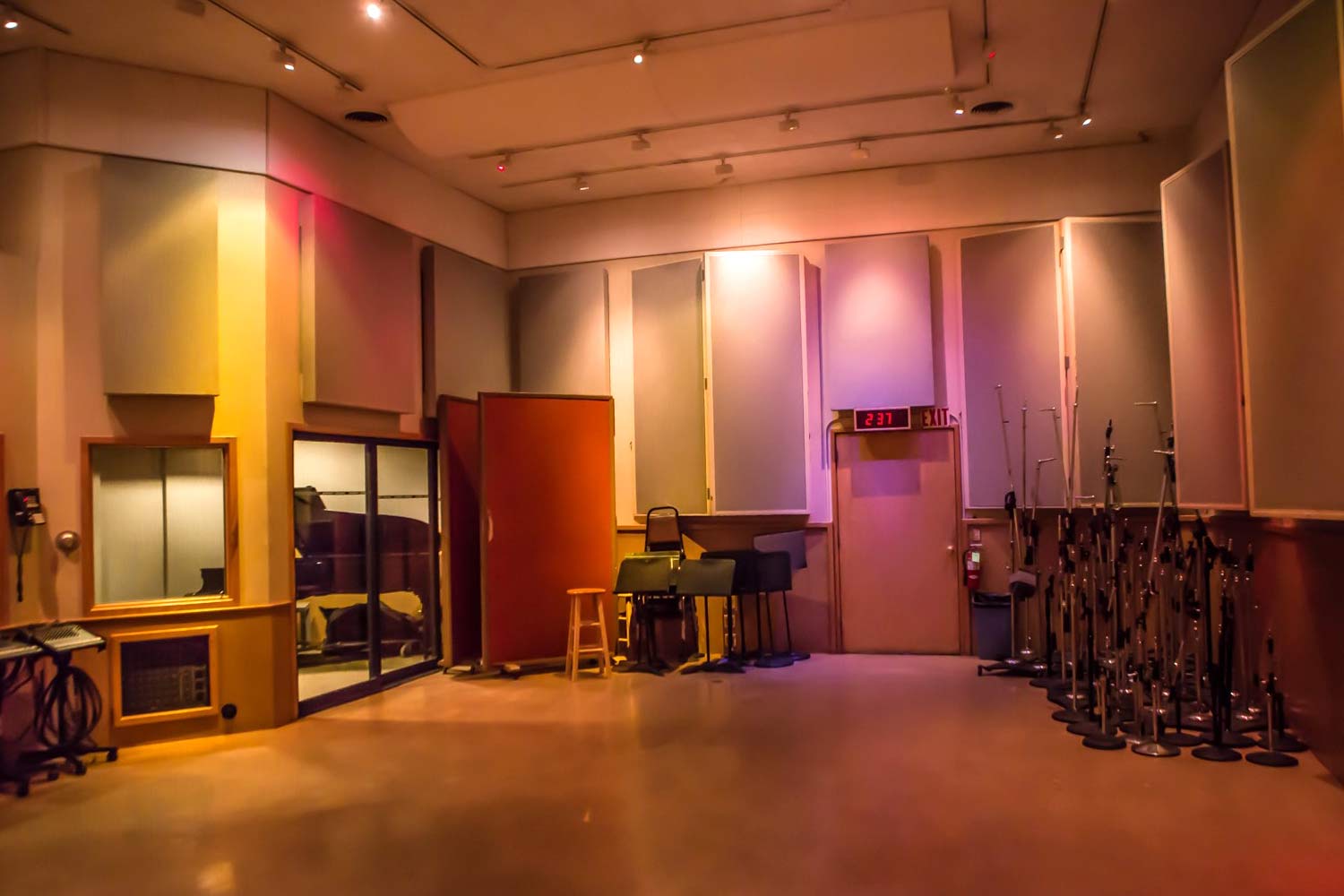
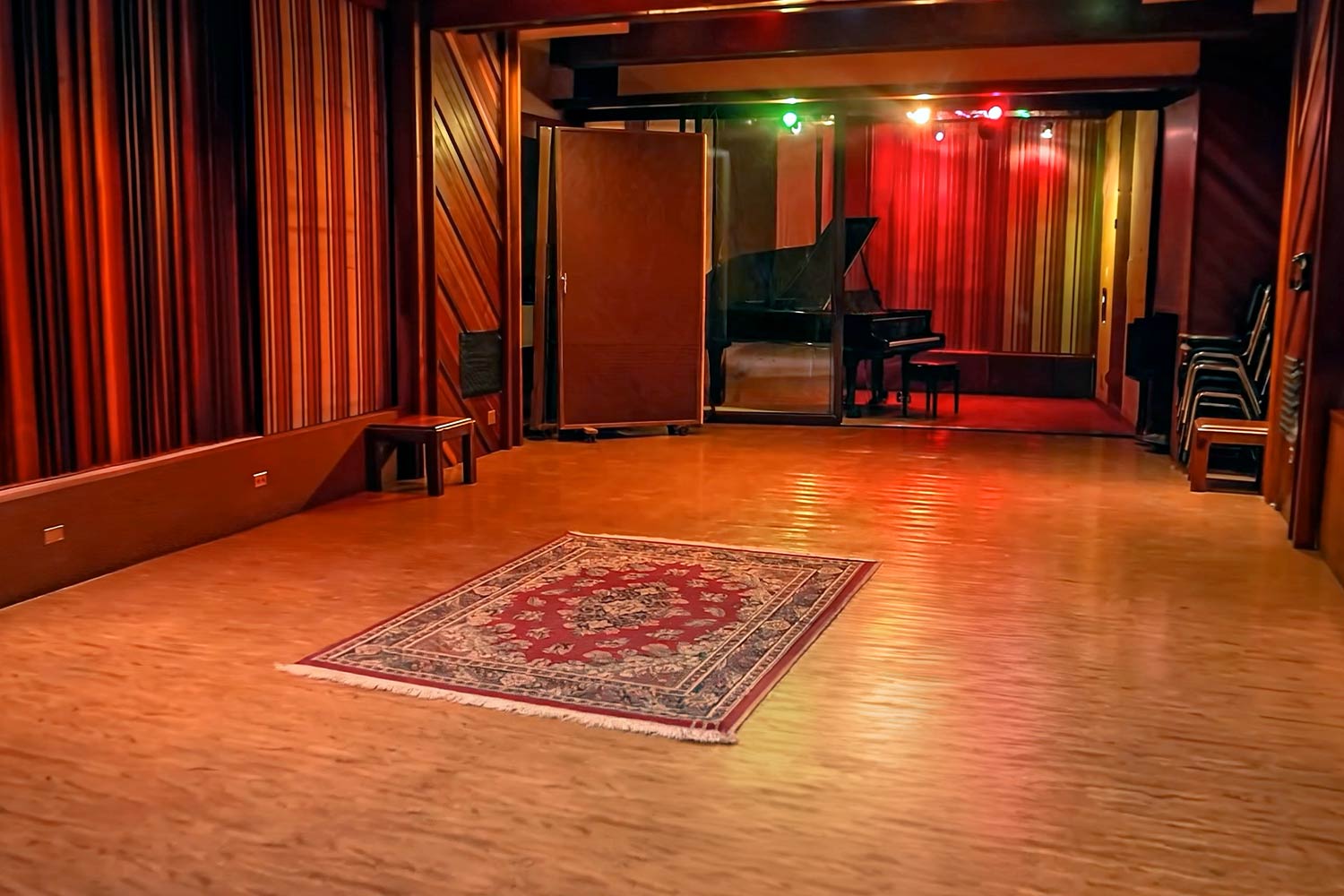
All the rooms and equipment have been carefully maintained since their construction in the early 60s, so their sonic imprint has remained exactly the same as they were when Sunset’s iconic sessions were tracked.

The deepest level of authenticity
To capture both the unique acoustics of each studio, IK used its unique Volumetric Response Modeling (VRM™), an advanced hybrid convolution technique, to deliver the highest-quality reverb effects possible, and ensure the results are indistinguishable from recordings made in the real rooms
Convenient tone shaping
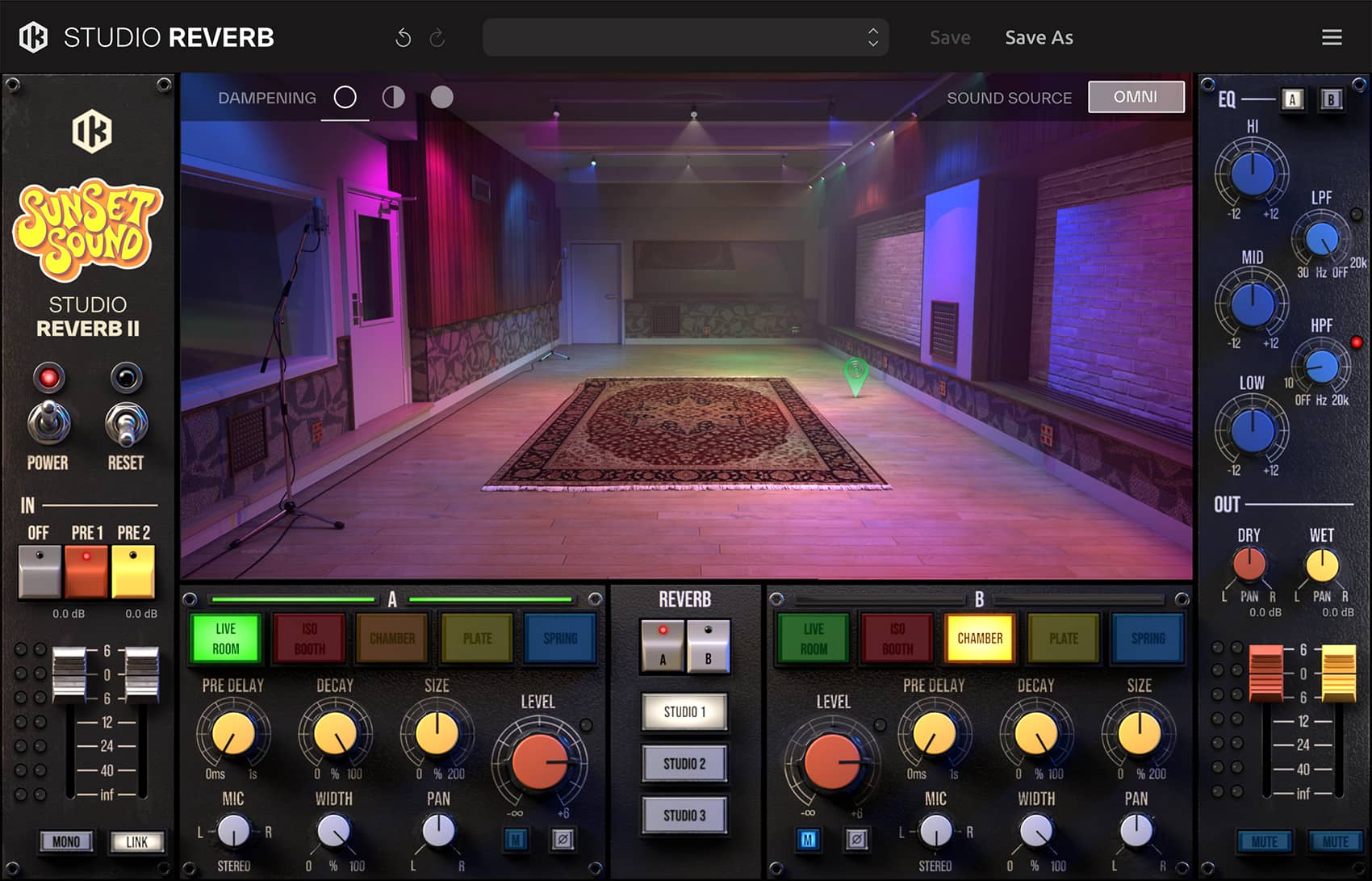
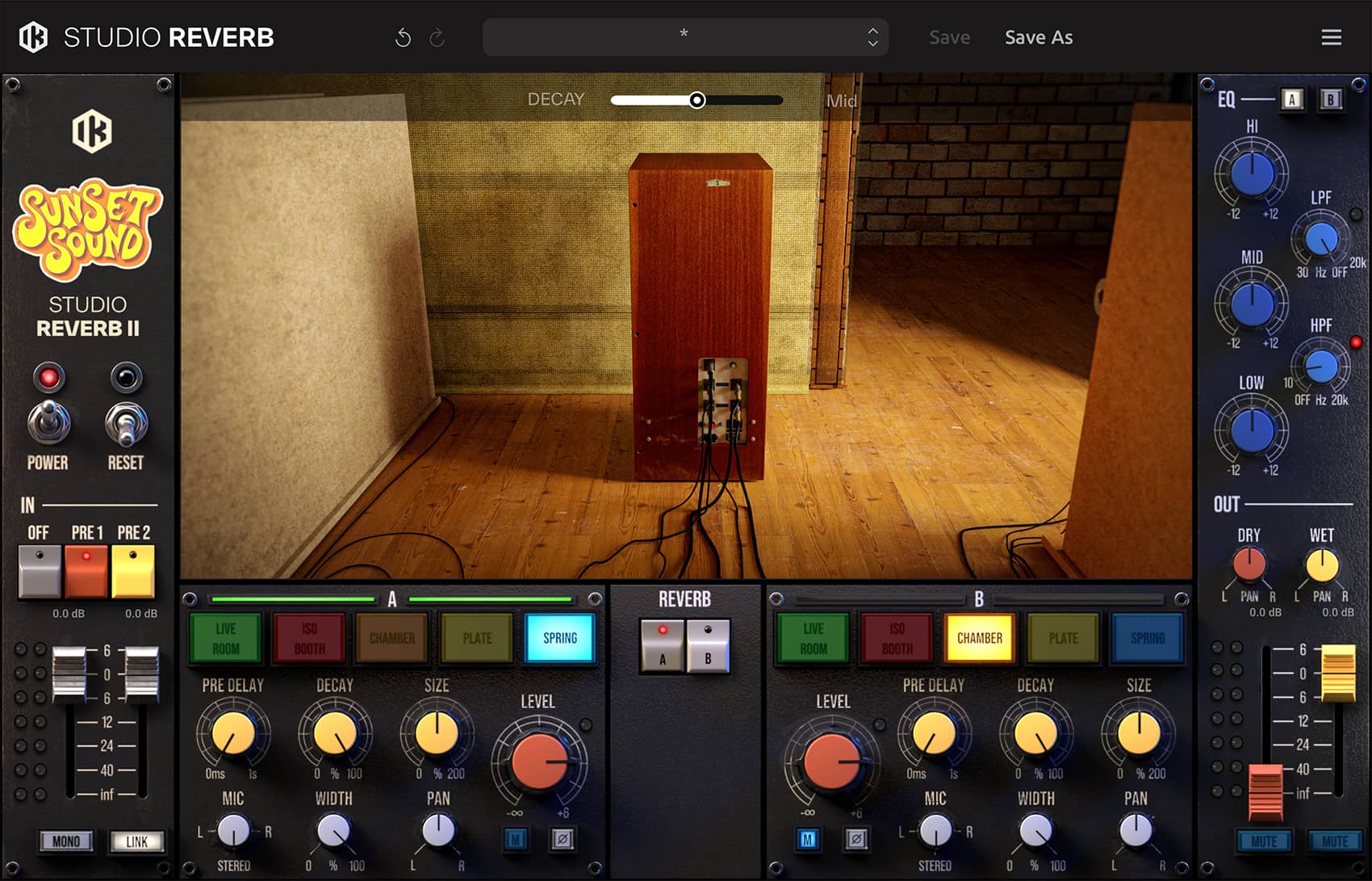
Sunset Sound Studio Reverb II offers all the necessary controls to shape your spaces including reverb time, width and frequency controls, microphone controls (left, right, or both) and accurate leveling/monitor of the mixed signals.
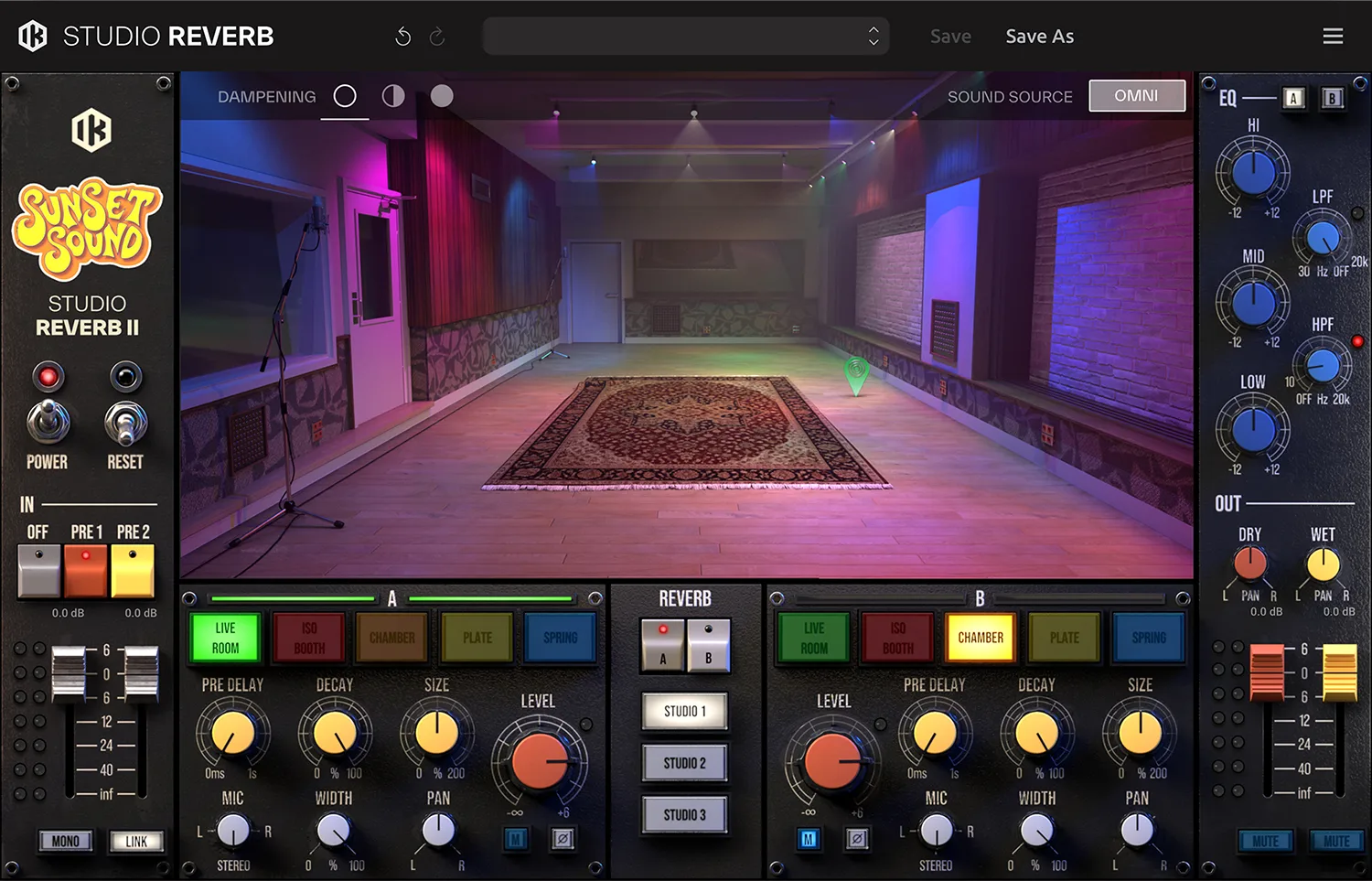
Preamp section: select between two different emulations: PRE1 = API/DeMedio, PRE2 = Neve.
Input controls:
- Adjust the gain of the incoming signal
- Link the faders to easily control stereo signals
- Sum the Left and Right channels to mono
Rerverb type: use these buttons to select the reverb type for each channel.
Reverb Modifiers:
- PRE DELAY: sets the time delay between the dry input signal and the onset of reverberation, ranging from 0 ms to 1 second.
- DECAY: controls how quickly the reverb fades out, with 100% representing the natural decay time of the selected space and 0% producing an extremely short 1 ms tail.
- SIZE: stretches or compresses the reverb to simulate larger or smaller spaces, with 100% being the natural room size, up to 200% for expansive ambiences or down to 0% for tight, compact reverb.
- MIC: selects which microphone capture to use: Left (L), Right (R), or Stereo (default), allowing you to choose between dual mono or full stereo imaging.
- WIDTH: adjusts the stereo spread of the reverb from 100% (full stereo) down to 0% (mono), narrowing the spatial image for more centered placement.
- PAN: positions the reverb anywhere in the stereo field from hard left to hard right, useful for offsetting the reverb from the dry signal or matching specific mix elements.
LEVEL: adjusts the output signal of the corresponding reverb channel. The A and B channels are routed in parallel, getting summed into a stereo signal controlled by the "WET" fader and pan.
Channel selector: selects what reverb channel is shown on the main display.
Studio selector: use this control to change the studio (for Live Room, Chamber, and Iso booth) or the plate type.
Output section: independently control the level, pan, and mute of the WET and DRY signals.
Equalizer: two fully independent equalizers to shape the wet signal of the A and B channels.
Sound Source mode: changes the sound source dispersion from directional (Omni off) to Omnidirectional.
Dampening: simulates the acoustic effect of sound-absorbing panels in Studios 1 and 3, with three levels (Off, Half, Full) that progressively reduce room reflections from bright and lively to dry and controlled.
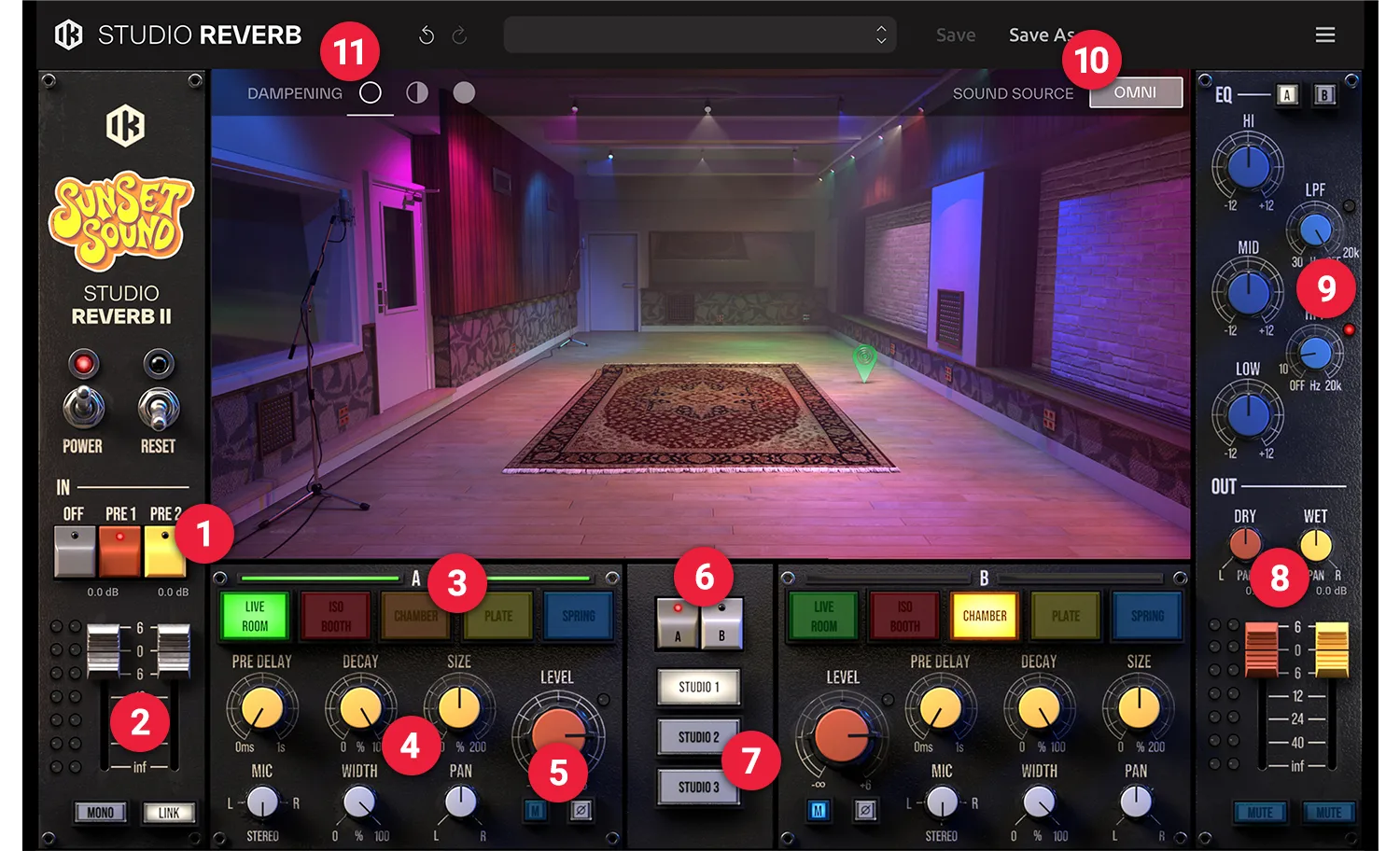
- Preamp section: select between two different emulations: PRE1 = API/DeMedio, PRE2 = Neve.
-
Input controls:
- Adjust the gain of the incoming signal
- Link the faders to easily control stereo signals
- Sum the Left and Right channels to mono
- Rerverb type: use these buttons to select the reverb type for each channel.
-
Reverb Modifiers:
- PRE DELAY: sets the time delay between the dry input signal and the onset of reverberation, ranging from 0 ms to 1 second.
- DECAY: controls how quickly the reverb fades out, with 100% representing the natural decay time of the selected space and 0% producing an extremely short 1 ms tail.
- SIZE: stretches or compresses the reverb to simulate larger or smaller spaces, with 100% being the natural room size, up to 200% for expansive ambiences or down to 0% for tight, compact reverb.
- MIC: selects which microphone capture to use: Left (L), Right (R), or Stereo (default), allowing you to choose between dual mono or full stereo imaging.
- WIDTH: adjusts the stereo spread of the reverb from 100% (full stereo) down to 0% (mono), narrowing the spatial image for more centered placement.
- PAN: positions the reverb anywhere in the stereo field from hard left to hard right, useful for offsetting the reverb from the dry signal or matching specific mix elements.
- LEVEL: adjusts the output signal of the corresponding reverb channel. The A and B channels are routed in parallel, getting summed into a stereo signal controlled by the "WET" fader and pan.
- Channel selector: selects what reverb channel is shown on the main display.
- Studio selector: use this control to change the studio (for Live Room, Chamber, and Iso booth) or the plate type.
- Output section: independently control the level, pan, and mute of the WET and DRY signals.
- Equalizer: two fully independent equalizers to shape the wet signal of the A and B channels.
- Sound Source mode: changes the sound source dispersion from directional (Omni off) to Omnidirectional.
- Dampening: simulates the acoustic effect of sound-absorbing panels in Studios 1 and 3, with three levels (Off, Half, Full) that progressively reduce room reflections from bright and lively to dry and controlled.


