Mixing for Feel with iLoud MTMs
D. Ramirez discusses how IK's studio monitors have transformed his approach

Few producers have influenced club sound design as much as D. Ramirez. Across decades of releases, remixes, and chart-topping anthems, he's balanced technical precision with pure dancefloor instinct. His latest single, Marimboid, marks another step in his evolution.
Released on Raven Records, the label he co-founded with Denney, it captures that signature mix of grit, groove, and polish that's defined his sound for years. Built around a driving marimba hook and rolling low-end, it's a hypnotic, high-energy track that showcases his talent for blending percussive rhythm with deep, textural sound design. It's a cut made for full-bodied club reactions, proof that even after decades in the game, he's still shaping the pulse of the dancefloor.
We had the opportunity to speak with D. Ramirez, who shared how the iLoud MTM has transformed his approach to mixing, ensuring that what feels powerful in the studio translates equally well to the dance floor. From low-end management to mentorship, he breaks down the habits and mindset that keep his music forward-thinking and emotionally grounded.
At a Glance
- Testing the impact beyond the studio
- What surprised him about the MTM low end
- Finding clarity on compact monitors
- Producing confidently while traveling
- Learning from new generations of producers
- Why "Marimboid" represents a creative turning point
So keep reading for the full conversation with D. Ramirez and see how he leans on instinct and feeling to achieve his career-defining mixes with the iLoud MTMs.
How do you test whether a mix has the same impact on the dancefloor as it does in your studio?
For me, a mix has to feel right everywhere, not just sound right in the studio. I'll test it on different systems — my car, headphones, club rigs — anything that gives me a real-world perspective. It's easy to get fooled by your own room, especially when you've spent hours locked in it. The real test is whether it moves you physically and emotionally when you're not analysing it.
When I play it loud, and I instinctively start nodding or smiling, that's the sign it's translating. I've also learned to step away for a day or two, come back fresh, and see if it still gives me that same feeling. If it hits just as hard, I know the mix has the impact I was chasing.
The biggest surprise was just how tight and honest the low end was. For smaller rooms or mobile setups, that accuracy is a game-changer.
I expected a small speaker to roll off too early or exaggerate the wrong frequencies, but the MTMs really hold their own. They don't hype anything — they just tell you exactly what's happening down there. The sub information is clear and controlled, which makes mixing bass-driven music so much easier. I can make confident low-end decisions without constantly second-guessing. They've really changed the way I think about compact monitoring — it's proof that you don't need massive speakers to get professional results.
Are there specific frequency ranges you pay closer attention to when you're mixing club music on compact monitors?
Absolutely.
When I'm mixing on smaller speakers, I'm laser-focused on the 100–300Hz range — that's where the groove and warmth sit, but it's also where mixes can quickly turn muddy. I'll also keep a close ear on the 2–5kHz range, because that's where harshness tends to creep in, especially with percussion and synths.
Compact monitors can exaggerate those areas, so you've got to learn how to read what they're telling you. I'll often use subtle references to tracks I know inside out to make sure I'm not drifting. It's all about balance — getting that solid, punchy mid-bass and keeping the top end smooth and open. Once it feels right on small monitors, it usually translates beautifully to big systems.
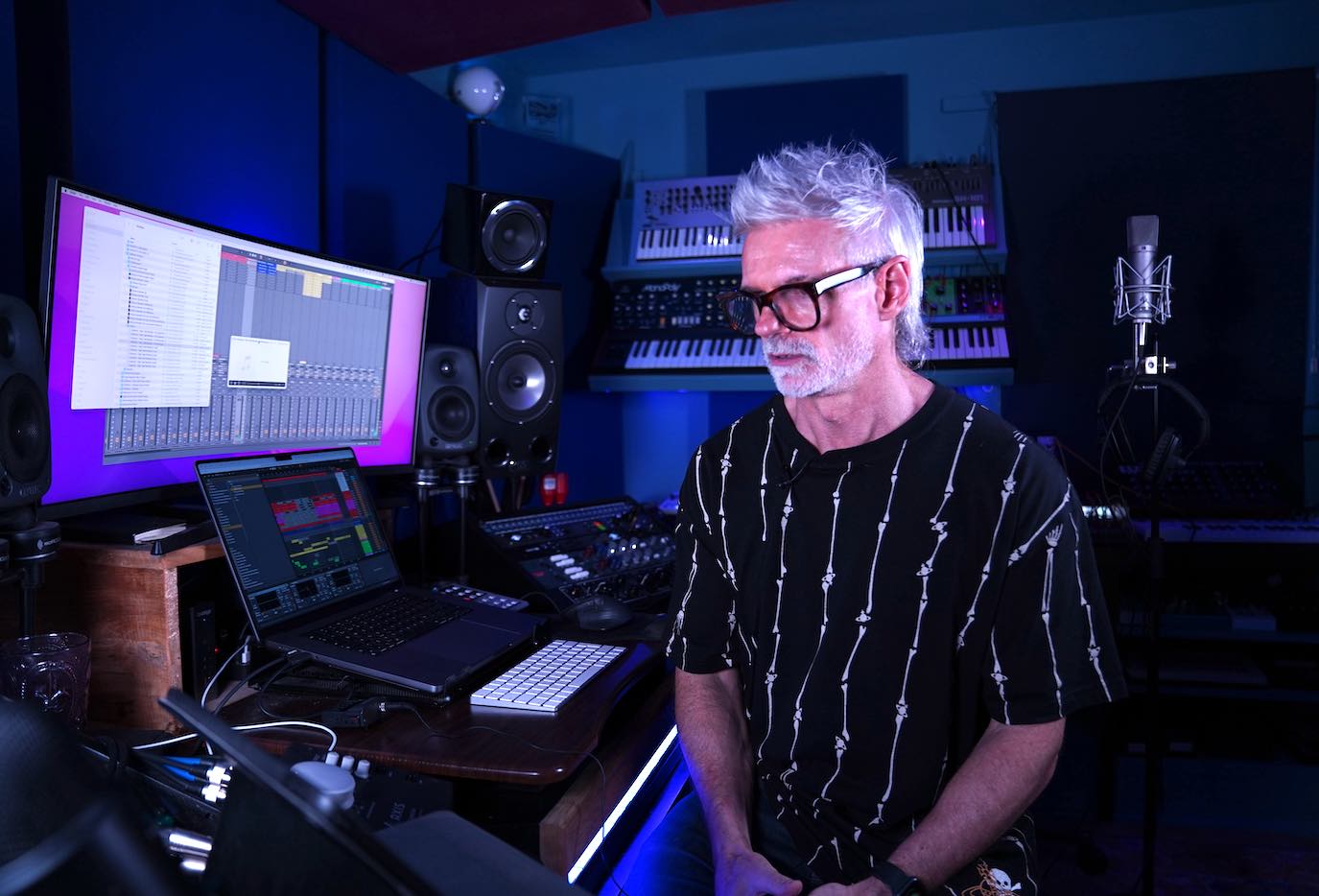
Have the MTMs changed how you think about producing while traveling or working in temporary setups?
Completely.
Before, I hated working away from my main studio because I never trusted what I was hearing.
The MTMs changed that mindset — they're compact, consistent, and incredibly revealing.
Now I can take them anywhere, set up in a hotel room or temporary space, and know I'm still making reliable mix decisions.
That's freed me up massively as a creative. I can follow inspiration wherever it strikes, instead of waiting to get back into the studio. It's made me realise that portability doesn't have to mean compromise — if you know your monitors and your sound, you can create great work anywhere.
Raven Records has quickly built a strong identity. What have the newer generations of producers taught you about keeping things fresh in your own process?
The new generation keeps me on my toes, in the best possible way. They've got this raw, fearless energy — they just create without getting bogged down in perfectionism. That's reminded me to stay playful and spontaneous in my own process.
They're also incredibly open-minded about blending genres and using technology in ways I'd never considered. I've learned a lot from that — it's pushed me to experiment more and to trust my instincts instead of relying purely on experience. With Raven Records, I try to keep that same spirit alive — it's about community, innovation, and pushing boundaries.
The younger artists bring that spark that keeps everything moving forward.
Finally, when you step back and listen to "Marimboid," what moment makes you feel most proud of where you are as a producer right now?
For me, it's the drop when the marimba line kicks back in — that hypnotic groove that just takes over. It captures everything I love about dance music: rhythm, movement, and emotion working together in perfect balance.
"Marimboid" feels like a return to my roots as D. Ramirez, where it's all about energy and connection on the dancefloor. But it also shows how I've evolved — there's more subtlety, more restraint, and more focus on mood. I'm proud of how the track bridges that old-school club feel with a modern, refined production approach. It's a reminder of why I do this in the first place — to make people feel something through sound.
And in that sense, it is the purest expression of where I am right now as a producer.
Conclusions and the Big Takeaway?
After decades at the center of electronic music, D. Ramirez still mixes like someone chasing that first rush of inspiration. His approach is equal parts technical mastery and instinct, refined through experience but driven by feel. The iLoud MTMs have become part of his creative toolkit, helping him stay connected to the mix's physical and emotional power wherever he works.
Marimboid captures the same balance he describes: precise, hypnotic, and alive with rhythm. It's a statement from a producer who knows exactly what moves a crowd and how to make that energy translate beyond the studio. Released through Raven Records, it's a reminder that great dance music lives where technology, instinct, and emotion meet.
iLoud MTM MKII offers sonic perfection and volume levels previously unavailable in this class of reference monitors, turning any space into the ideal mixing and mastering setup.

iLoud MTM MKII